By Gaëtan Vaudry
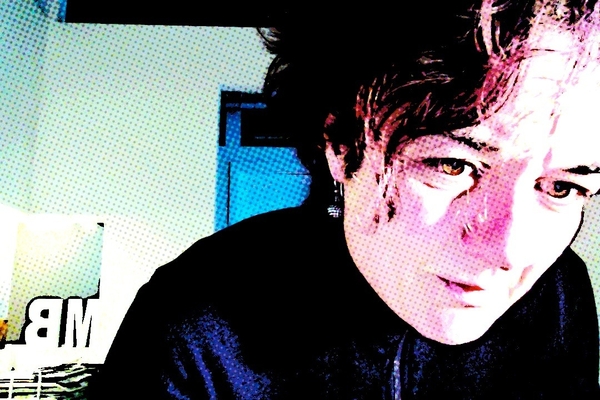
Photo: Facebook
Summer 2024 will see the release of "
The Chef and the Customs Officer
", the new film by Baie-Comeau filmmaker Manon Briand. It will have been 10 years since her last work, "
Liverpool
", released in 2012. In an interview with journalist Maxime Demers of the Journal de Montréal, Manon Briand explains that this is the fifth script she has worked on over the past decade and it’s the one that finally led to filming.
The new film by the director of "La Turbulences des Fluides" tells the story of a fame-seeking French chef who tries to help a child win a culinary contest. However, he must face the hostility of an entire village towards the child's mother, the uncompromising local customs officer. The lead role in this comedy was given to French actor Édouard Baer, known for his role as Astérix in "Astérix and Obélix: God Save Britannia". He is well supported by Julie Le Breton, Sylvain Girard, Normand Chouinard, Michèle Deslauriers, and Dominic Paquet: "I treated myself. I included everyone I love", notes the director in the interview.
In 2003, Manon Briand received 4 nominations at the Jutra Awards (now the Iris Awards), including Best Screenplay, for her masterpiece "La Turbulences des Fluides". A decade later, she won the Women in Film and Television Artistic Merit Award at the Vancouver festival, for her feature film "Liverpool".
Sexual Ambiguity
A graduate of Concordia University in Fine Arts, majoring in film, Manon Briand captures the pulse of her generation of trendy urban gays, lesbians, bisexuals – and even heterosexuals – for whom sexual identity is a matter of the heart, in her first work "Les Sauf-Conduits" in 1991, a short film starring Luc Picard and Patrick Goyette. With her first feature film "2 Seconds", the filmmaker presents a deftly crafted melodrama about a washed-up lesbian cyclist who thrives as a bike courier in the worn streets of Montreal. Charlotte Laurier, Dino Tavarone, Yves P. Pelletier, and Suzanne Clément star in this 1998 film.
In the early 2000s, "Heart—The Marilyn Bell Story", an English-language television biography about Toronto marathon swimmer Marilyn Bell, starring Caroline Dhavernas, allowed Briand to hone her directing skills, as well as to further explore her interest in female bodies, athletic challenges, and sexual ambiguity.
Needless to say, the free encyclopedia Wikipedia categorizes Baie-Comeau's Briand in the category "Canadian female directors whose work is marked by LGBTQ themes".
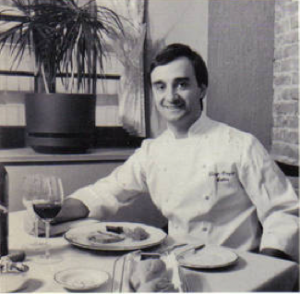
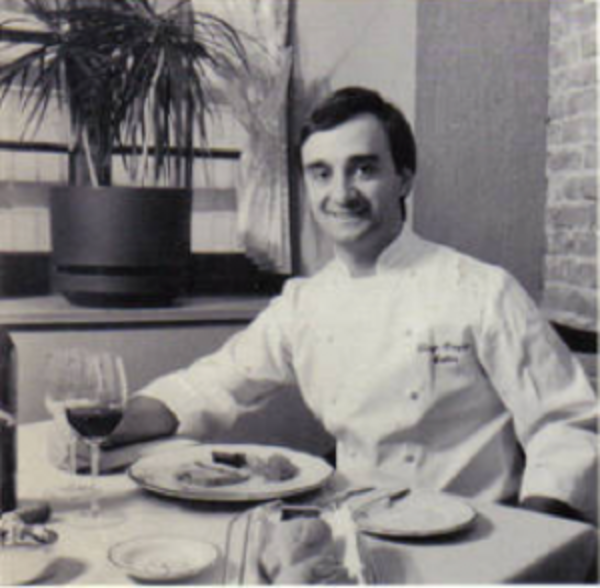
A native of Lyon in France, Serge Bruyère fell in love with the city of Québec from his very first visit in 1976. He immigrated to its province during the Montréal Olympic Games, working at the Queen Elizabeth Hotel before moving to Québec city. Prior to leaving his native country, he had undergone his training in the kitchens of l’Auberge du Tunnel in Auvergne with Paul Bocuse and the Troisgros brothers. He first worked at the Hilton before becoming executive chef at the Éperlan restaurant. One year later, he founded the Marie-Clarisse restaurant near the Breakneck Stairs (l’Escalier Casse-cou) with another partner. In 1980, he undertook a new adventure at the Maison Livernois on Saint-Jean Street, this time on his own: Serge Bruyère’s restaurant À La Table was created. He was among the very first chefs to work closely with local craftsmen in order to obtain high quality products for his menu.
Serge Bruyère died prematurely in 1994 at the age of 33. His heritage is considered enormous: he introduced an updated version of haute cuisine, laying the foundations of a gastronomy concerned with great quality and based on a relationship of proximity with his suppliers. Throughout the 14 years of existence of À La Table, Bruyère devoted time and energy in training dozens of competent chefs like Daniel Vézina, Jean Soulard and Marie-Chantale Lepage, who to this day remain inspired by his culinary philosophy.
His passion for gastronomy as well as his devotion to the recognition of the trade were immense. He knew how to transmit his enthusiasm and the importance of working with precision, and also to respect clients and producers. Bruyère is one of only two Québec chefs to be included in the Larousse gastronomique lexicon, and was the first to introduce new cuisine to the city.
He was a humble, sympathetic and respected chef. His passion for quality produce and his unfailing technique and hard work, along with the sharing of his knowledge were of utmost importance to him. The Fondation Serge Bruyère, which is dedicated to the encouragement of Québec’s new culinary talent, serves to perpetuate his legacy.
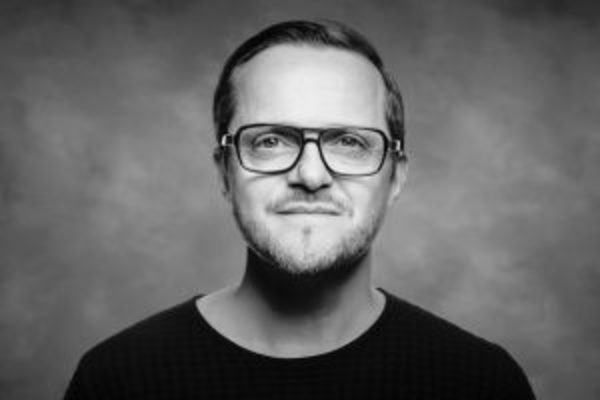
A graduate of l’École de danse du Québec in 1989, Harold Rhéaume first worked with Danse Partout (Québec) before joining the ranks of the prestigious Dance Lab Group in Ottawa. Under the guidance of Peter Boneham, he began exploring the fundamentals of dance performance and choreographic creation. He settled in Montréal in 1993 and rapidly gained recognition. In 1997, La Presse newspaper said that "…when he dances, Harold Rhéaume radiates such intensity that he seems larger than life, …he is among those who dance to say things and move you." Like Robert Lepage, Rhéaume returned to Québec city, founding his company Le fils d’Adrien danse (his father’s name) in Saint-Roch, which was at the time transforming into a culturally vibrant neighborhood.
With his humanism as well as his interest in clarity of intent, Harold Rhéaume distinguishes himself from other formal and conceptual trends. His pieces are inventive and refined without ever being pretentious. Inspired by day to day life, Rhéaume works from instinct and spontaneity and has a wide spectrum of influences including musicals, theater, painting, modern architecture, jazz and contemporary music. He also distinguishes himself in having his dancers be part of the creative process. Their personalities and personal experiences, and even their limits, are of much importance in shaping the shows.
Openly homosexual, the choreographer responds with humor when a journalist asks him if all contemporary dancers are gay : "That is wholly exaggerated. I’d say 90%!"
In addition to the choreographic work with his own company, Harold Rhéaume has worked with Cirque du Soleil and contributed to theater, cinema and opera. He is a teacher of physical expression at the Conservatoire d’art dramatique de Québec, as well as choreographic creation at l’École de danse de Québec and l’École de danse contemporaine de Montréal.
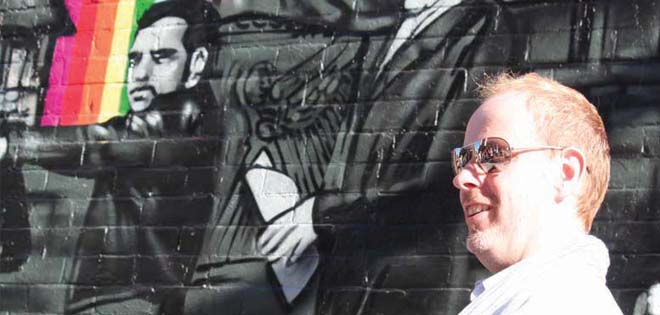
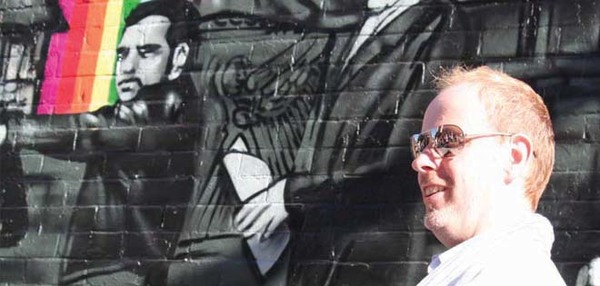
Glenn Crawford was the instigator of the Build Our Bank and LGBT Village initiatives in the famously reserved capital since starting the volunteer-run project in 2007. While he has recently stepped down as president of The Village, making room for new ideas from successor Ian Capstick, Crawford has left an indelible mark on a town where there wasn’t a lot of consensus about creating a gay village.
Born out of town hall meetings about the reconstruction of Bank Street, the idea of designating the stretch between Wellington and Gladstone as The Village was about “trying to get a sense of belonging and place, where people feel they can be themselves, have access to services, fool around and shop,” Crawford says. “Gradually a lot of LGBTQ organizations have coalesced into this area… Forming The Village was a natural progression.” When he started fundraising and participating in public advisory committees five years ago, Crawford came up against both the veiled homophobia of a local business improvement association, as well as criticism from the LGBT community that the project was coming 10-20 years too late.
“People were asking Why do we want to create a ghetto? A lot of that criticism comes from people who are out [of the closet],” Glenn says with his typical incisiveness, “from people who have the relationship, two dogs and friend circle. I don’t need a Village either! It’s for people who are struggling in suburban or rural areas; it can be for everyone.” And as a child of the sleepy, inaccessible suburb of Kanata – “not an easy place to grow up gay” – Crawford speaks from experience. Like most LGBT people in any Village in any major city anywhere, the urban geographic bubble exists as much for townies as it does for people who have moved there to escape the stifling places they come from.
And lest you think that Crawford’s project was for commercial reasons alone, it may seem counterintuitive that he’s not a shop-keeper himself, but rather a website and graphic designer who lives just off Bank and works part time in a local gallery. “There’s a social aspect to it. Taking pride in who you are and finding a sense of value in there being a community,” which for him includes keeping the subsidized housing in the area, and watching out for condo development that could “force out the funkier elements.”
“It’s [about] putting roots down; people say it’s 20 years too late, but for me it’s just in time,” Glenn concludes. Echoing a theme that has emerged in everything from architecture to sociology, he adds that “The online world is not the same as having a real community. I worry about that, about younger generations, they’re not valuing the sense of community.”
So maybe when you walk by the “We Demand” mural that The Village commissioned on Gladstone and Bank Streets, you might get a sense of what that community looks like and is for, and clap your fairy hands for Glenn Crawford.
Photo by Noreen Fagan