
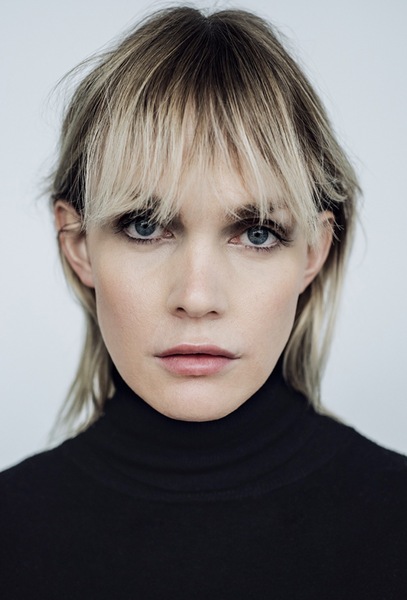
A multidisciplinary artist born in Saint-Siméon, Gabrielle Boulianne-Tremblay published her first poetry collection, Le Ventre des volcans, in 2015 and a second, Les secrets de l’origami, in 2018. In 2021, she released her first autofiction novel, La fille d’elle-même, which she finally ‘gave birth to’ after beginning it at age 15. It is a coming-of-age account of a child’s experience of trans identity in a Québec that is both cruel and full of life. Set amid Charlevoix’s bucolic landscapes and the majestic Saint-Laurent, the novel changed her life and offered Québec a more intimate view of a reality that is still often little known.
La fille d’elle-même is to be adapted for television, and the following year the novel received the Prix des libraires du Québec. It is the first French-language autofiction novel written by a trans woman in Québec. In 2025, Boulianne-Tremblay published La fille de la foudre, a sequel exploring life after transition through the experience of a woman with borderline personality disorder.
After earlier appearances in several documentaries and short films, she made her feature-film debut in 2016 in Mathieu Denis’s Ceux qui font les révolutions à moitié n’ont fait que se creuser un tombeau. Her performance as Klas Batalo earned a best supporting actress nomination at the Prix Écrans canadiens, making her the first trans woman nominated as an actress by those awards.
A trans-rights activist, she served in 2023 as spokesperson for the first Fierté Charlevoix.
In 2026, she wrote François.e, a comedy in which François, a declining cisgender male screenwriter, poses as a trans woman to obtain financing for a television series. The film was very well received by critics.
Travel log


Eve Lambert
From Worst to Best
Born in Chicoutimi, Eve Lambert began her literary career in 2017 at age 25 with Tu aimeras ce que tu as tué. The debut novel achieved major success, was published in France and was later translated into English. It already received extensive praise and a few significant literary awards. Set in a sinister, morbid version of Chicoutimi, the novel adopts hatred as a literary tone and fiercely attacks the xenophobia and homophobia that still rage in Québec.
Eve Lambert holds a master’s degree and doctorate in creative writing from the Université de Montréal. Her thesis on the creative process in the work of Victor-Lévy Beaulieu won the Université de Montréal’s award for best thesis in arts and humanities. Known before her gender transition by her birth name, Kevin Lambert, she has said that she wants her work to participate in a movement of gay affirmation. ‘I like being part of the LGBTQ category,’ she says.
Writers are known to sometimes write under the influence of drugs or alcohol. By her own admission, Eve Lambert sometimes writes under the influence of anxiety. ‘I tend to imagine the worst that could happen,’ she confides. ‘In the opening scene of my novel Querelle, I imagined my boyfriend, who wasn’t yet officially my boyfriend at the time, screwing a bunch of other guys. I didn’t censor myself; I went completely wild. When I write, I’m not necessarily in a state of well-being, even if there’s something liberating in letting our imagination run wild. There’s a kind of ecstasy in freeing ourselves from our anxieties.’
Since 2018, she has published three further novels, Querelle de Roberval, Que notre joie demeure and Les sentiers de neige, all of which also appeared in France. The record confirms her as a prolific author and recipient of the most prestigious awards, including the renowned Prix Médicis in 2023.
In 2023, she adapted Marie-Claire Blais’s novel Un cœur habité de mille voix for the stage. The production premiered at Espace Go in April 2024 and drew widespread praise for its bold theatrical portrayal of an aging gay man’s life.
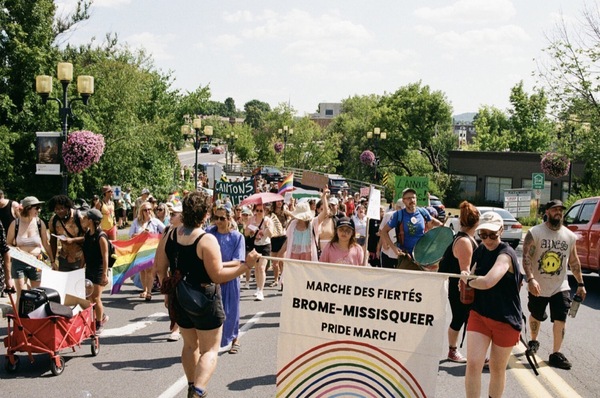
The Brome-Missisqueer collective is back with a second Cowansville Pride March on August 22. LGBT+ people, allies and friends are invited to join a march starting at 1:30 p.m. on rue du Sud, then head to an LGBT+ village set up at parc Centre-ville at 3 p.m.
The event will feature festive, fun and educational activities. ‘This year, it was important for us to apply the lessons from the first edition, which was organized in five weeks, so we can improve our facilities and include more partners in our event,’ says Béa Touchette, one of the collective’s members.
‘Last year’s success truly energized us as a collective. Our first goal is to show that welcoming communities for queer people exist in our rural areas and that people can put down roots there and build networks of solidarity,’ added Alex Fortin, another member of the collective.
The Brome-Missisqueer collective was recently formed by six people to promote the fulfilment of 2ELGBTIA+ people in rural communities and counter the rise of intolerance.

August 23: a Pride day in Sept-Îles
Queer Nord will once again present a day celebrating sexual and gender diversity. The expression of LGBTQ2E+ Pride and community sharing will take centre stage on Sunday, August 23, beneath the Tente jaune on the Vieux-Quai in Sept-Îles.
The day has particular significance for Queer Nord because it is the first Pride celebration since the group incorporated as a non-profit organization. ‘This is a new stage in the committee’s history as it continues to develop and help improve the living conditions and well-being of people representing sexual diversity and gender plurality (DSPG) on Côte-Nord.’
Organizers note that the chosen site in Sept-Îles stands on the unceded Innu territory of Uashat mak Maliotenam. They invite members of Innu communities and residents from across Côte-Nord to celebrate together at parc du Vieux-Quai.
The programme includes creative, participatory activities such as sign-making, a collective artwork, face painting, a music jam and karaoke. The day will conclude with the Pride March at 3 p.m.
Queer Nord will provide tables for artists and organizations wishing to present their work, services or projects. An open microphone will allow participants to share a text, poem, song or any other form of expression that inspires them.
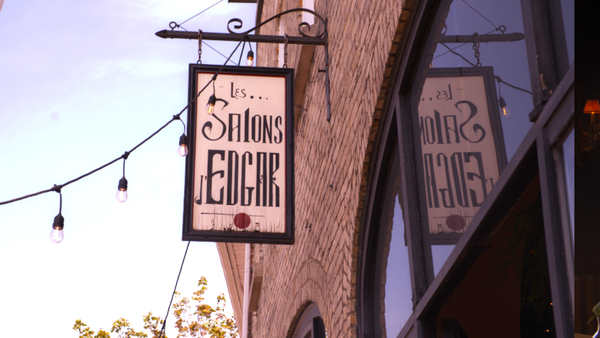
Les Salons d’Edgar started in 1997 in Québec’s Saint-Roch neighbourhood. The space was once a theatre called Les Fourberies, but it didn’t take long for it to become a cultural hub where artists, students, professionals, and locals all mixed together.
If you’ve been coming for years, you might have spotted Robert Lepage here, actor, playwright, director, and entrepreneur, who made the place his regular hangout.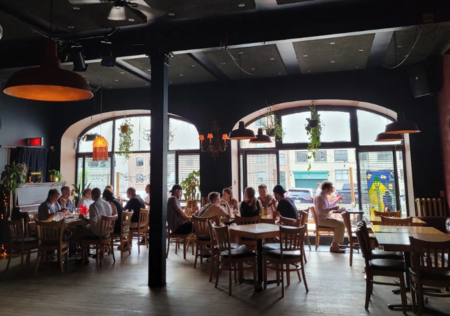
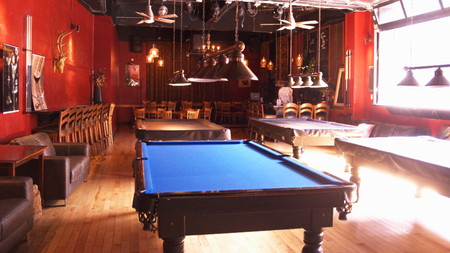
François Boulianne and Annie Brassard ran the show for nearly 25 years. In 2022, after a pandemic transition, new owners took over, with the founders staying on to guide the team. Actor, director, and casting agent Nicolas Létourneau says he and his friend Raphaël Posadas (a director, stage director, and actor) bought the place on a whim, they were already regulars.
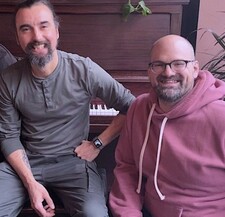 Two of the partners: Raphaël and Nicolas.
Two of the original four partners moved on to other projects. Chef Francis Proulx joined later, and longtime employees Lou Miriam Bolduc and Léa Ratycz-Légaré became partners in 2024. Now, each member of the team handles part of the business based on what they do best.
These days, shared management, a fresh approach, and a focus on making guests feel at home keep Les Salons d’Edgar a Saint-Roch staple. Over 25 people work here, covering the kitchen, service, and bar.
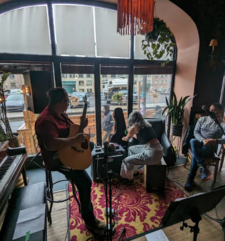
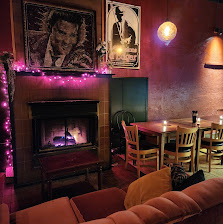
Les Salons d’Edgar is a Québec nightlife landmark, comfort food, craft cocktails, and an eclectic, welcoming space. Every evening from 5 PM (closed Mondays), the two rooms offer pool tables, a small stage, dance nights, and two bars, one up front, one in the back, for different moods. It’s warm, a little over-the-top, and always fun, with a cozy vibe that keeps people coming back. In summer, the sunny terrace out front is the perfect spot. Saturday nights are especially lively, much to the delight of longtime regulars.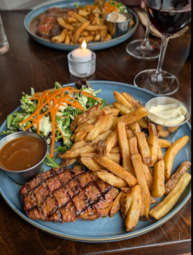
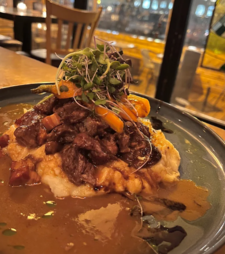
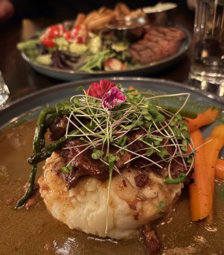
A few years ago, the team got a restaurant license, so now minors can join adults and enjoy the kitchen and its well-loved menu every evening from 5 PM. When asked about the most popular dishes, Nicolas doesn’t hesitate: the marinated beef flank steak, the shareable nachos platter, and the classic poutine. Brunch is served on Saturdays and Sundays from 10:30 AM to 1 PM.
The team at Les Salons d’Edgar has big plans. They’d love to buy the building and add a second floor to the back for private events, group gatherings, or performances.
Nicolas Létourneau, who had no restaurant experience before taking over Les Salons d’Edgar, recently became co-owner of Chez Victor on boul. Laurier with the same partners. It’s a new adventure for him, with a team of about twenty and updates to the space to make the experience even better.

Les Salons d’Edgar
lessalonsdedgar.com
263, rue Saint-Vallier Est
Québec (Québec), G1K 3P3
418 523-7811
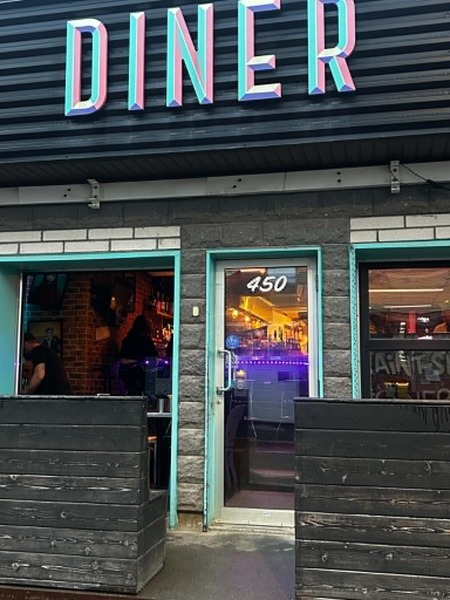
It’s early May 2026, a rainy Tuesday night in Saint-Sauveur. The neighborhood is in the middle of a makeover, especially along Rue Saint-Vallier Ouest. Parking’s a little tight if you’re driving, but the place still pulls you in, two big garage-style doors swing open to the street, promising something cozy inside.
Step through those doors and you’re in a snug, thirty-seat room. Some tables have retro banquettes, others face the kitchen so you can watch the chefs at work. The whole place feels like the neighborhood’s favorite hangout, laid-back, a little rowdy, and totally fun. That’s the vibe before you even look at the menu.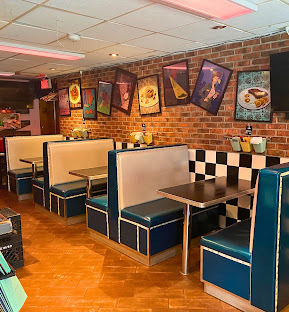
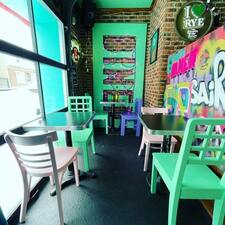
Diner Saint-Sauveur has been serving up its take on comfort food for eight years now. The three partners behind it love the way locals keep coming back, and how word has spread, visitors from across the Capitale-Nationale region, even tourists who’ve heard about the food, stop by to see what the fuss is about.
The team is small, eight people working shifts from 5 PM to 10 PM, Monday to Saturday, and 2 PM to 9 PM on Sundays. When we visited, partners Sylvain Barbeau and Eric Lemay showed us around. You can tell they live for this: years in the business, stories from every corner of it, and a clear idea of what they want the place to be.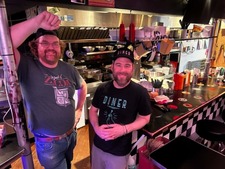
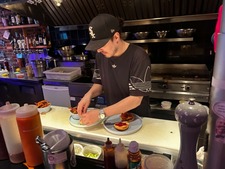
The menu is all about reinventing classics with an American diner twist. Burgers, classic and creative, share space with indulgent poutines, mac ’n’ cheese, and chicken ’n’ waffles. We tried their hot chicken sandwich: breaded chicken on grilled cheese, smothered in homemade brown sauce and peas. It’s the kind of dish that makes you want to come back for more.
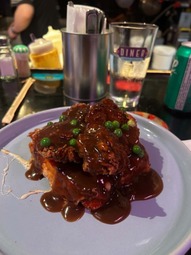


Other favorites include fish ’n’ chips, pâté chinois, pasta, meatloaf, and seafood. If you’re feeling adventurous and the ingredients are in, you can even build your own plate.
Drinks are just as thoughtfully put together. There’s a solid lineup of Québec microbrews, wine by the glass or bottle, and cocktails that are creative without trying too hard.
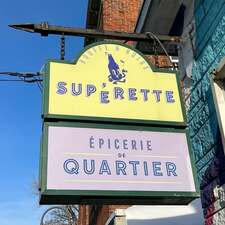
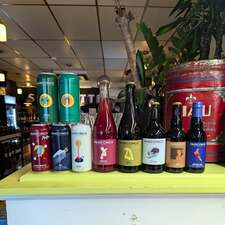
Space is tight, so the team opened *Supérette du Dîner* next door. It’s a neighborhood grocery focused on Québec-made food and drinks, craft beers, ciders, artisanal wines, plus non-alcoholic options and ready-to-drink mixes. It keeps the kitchen from getting overwhelmed and makes sure you can still grab something great even if the restaurant’s full.
The *Supérette* also stocks homemade ready-to-eat meals from the diner. It’s a smart way to let more people enjoy what they’re cooking, and the grocery’s open seven days a week with flexible hours.
Le Diner Saint-Sauveur
dinersaintsauveur.ca
450 Rue Saint-Vallier Ouest
Québec, QC G1K 1L1
(581) 741-4090
Supérette, neighborhood grocery
superettedudiner.com
411 Rue Saint-Vallier Ouest
Québec, QC G1K 1K7
581 705-9555
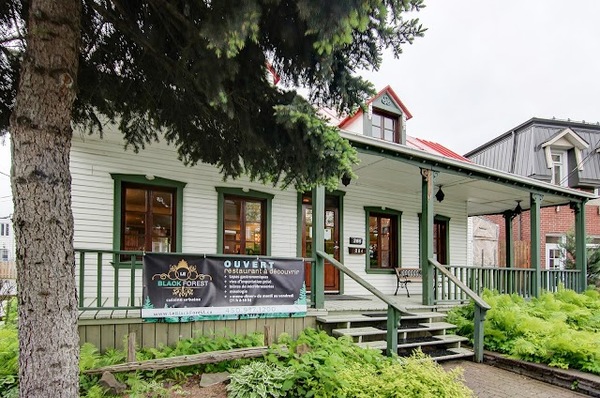
In Laval’s Sainte-Rose neighbourhood, just steps from the rivière des Mille-Îles, an old ancestral house dating from 1834 has been home to a restaurant for more than 40 years. Local regulars knew it as La Vieille Histoire until Jean-François Pépin and Mélanie Joannette decided to buy it.
Since 2017, the couple have been living a long-held dream through their restaurant, Black Forest – Cuisine urbaine. The concept grew from an idea of sharing and discovering the senses. Textures, flavours and innovation come together to create an urban culinary journey.
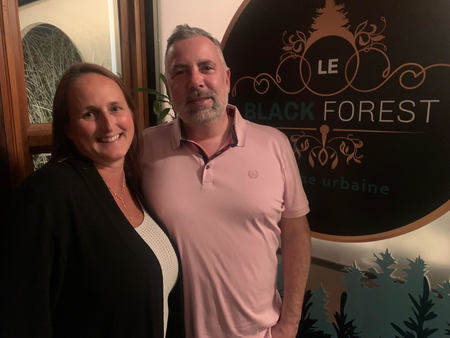
To understand what led to the acquisition, it helps to know that restaurants have been part of the Pépin family’s DNA for at least three generations. Jean-François’s grandfather and father both ran restaurants before him. In the 2010s, he also worked in the industry, including four years operating a catering service for an aviation-services company in Mirabel. The couple then began looking for a restaurant, and an opportunity arose on boulevard Sainte-Rose in Laval.
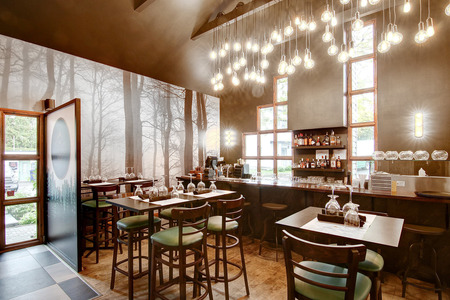
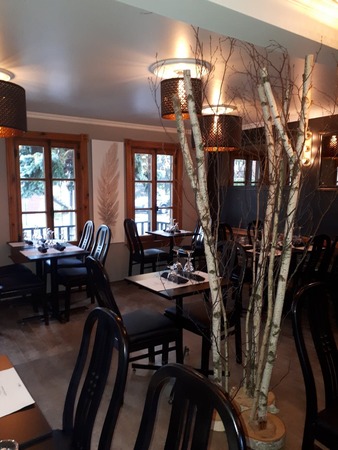
From the outset, Jean-François and Mélanie chose to transform the restaurant’s style and menu, making a complete break with its previous tradition. They nevertheless preserved the warm atmosphere of a cosy cottage from days gone by, something guests feel as soon as they enter. Modern decorative elements subtly refresh the interior. Warm colours, woodwork and a layout designed for comfort and conversation immerse diners in its charm.
It is the menu, changing monthly and with the seasons, that lets the chefs’ creativity whet the appetite. Having created around 800 gourmet tapas since 2017, the Black Forest team invites diners into its epicurean world. Jean-François Pépin, who leads the kitchen with his deputies, favours local ingredients and products from Québec’s terroir. They are prepared through a globally inspired culinary vision shaped by many influences.
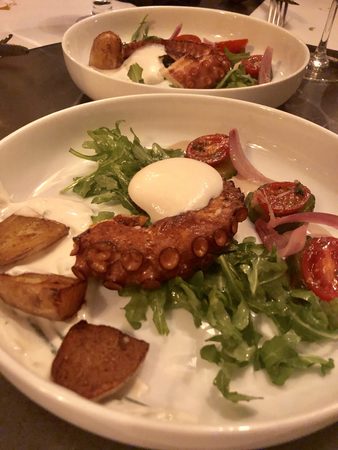
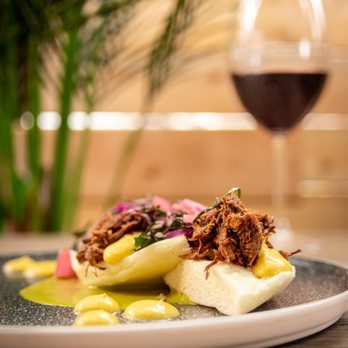
Food-and-wine pairing is another speciality of this 19-employee restaurant. The owner is an accomplished sommelier for whom wine is a genuine passion. The wine list combines private imports with quality selections from the SAQ, chosen to complement the tasting menu.
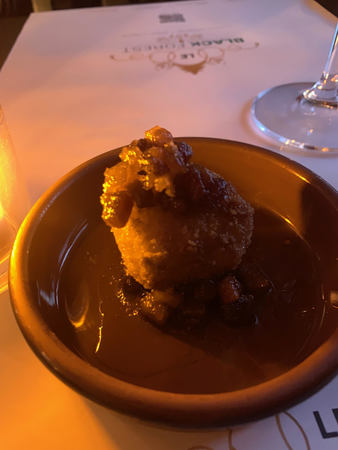
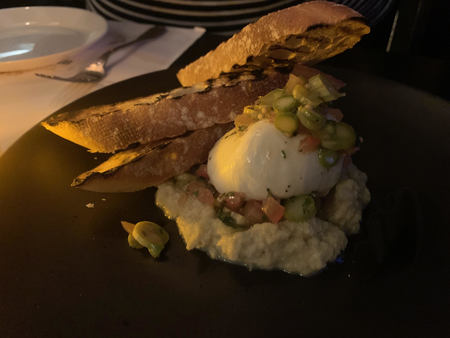
The à la carte menu consists of dishes designed for sharing, but the tasting menu is an even better way to experience the restaurant. It begins with a bite of the day followed by 10 dishes from the monthly menu. The selection always includes two raw preparations, such as ceviche and vegetable tartare; two house-made pasta dishes; two protein-centred dishes; two fish or seafood dishes; and two vegetarian dishes. An original dessert can be added to complete the meal.
Each dish is portioned for four diners but can be adjusted for three or six. In addition to wine, the restaurant offers a wide range of craft beers and delicious cocktails to accompany the meal.
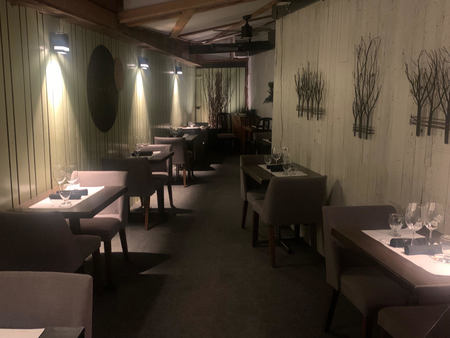
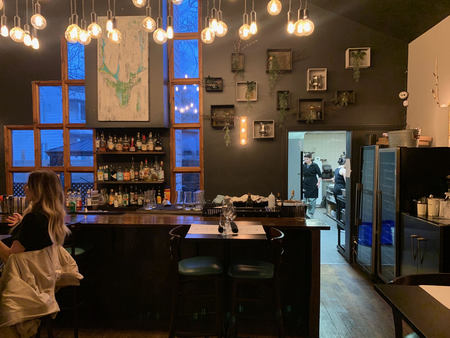
Black Forest also offers takeout, a service that proved especially popular during the COVID-19 pandemic. Groups can be accommodated in a dedicated room. Diners may choose the more discreet dining room or the bar area beside the kitchen. In summer, the terrace on the front veranda is particularly popular.
As if that were not enough, in 2022 the restaurateur couple extended their culinary venture by opening a second Black Forest in Terrebonne. It has its own distinctive identity, atmosphere, décor and menu, attracting customers from both the local area and the wider region.
Le Black Forest – Cuisine urbaine
leblackforest.ca
284, boul. Sainte-Rose
Laval (Québec) H7L 1M3
(450) 937-1200
Pierre Perreault
Yvan Ouellet has always been an avid traveller. Originally from Rimouski, with a background in advertising, and based in Québec since 1994, it was precisely after returning from a trip to discover the world, broadening his mind and his knowledge, particularly of a wealth of gastronomic flavours, that he decided to go into the restaurant business.
It all began in 1996 under the name 47e Parallèle, on rue Sainte-Anne, in the heart of the historic charm of Vieux-Québec. Its name referred to its geographic location, well suited to a seasoned traveller like him. It was there that the first foundations of the establishment's identity were laid, driven by a vision of excellence and hospitality, with the collaboration of French chef Joseph Sarrazin, who arrived shortly after and remains part of the restaurant team today. They then developed a catering service that quickly became popular. 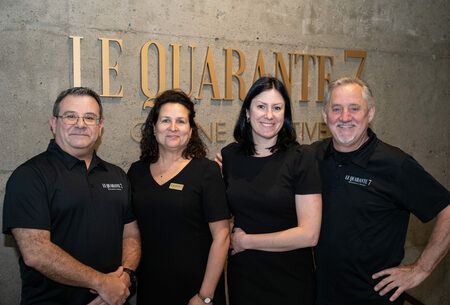
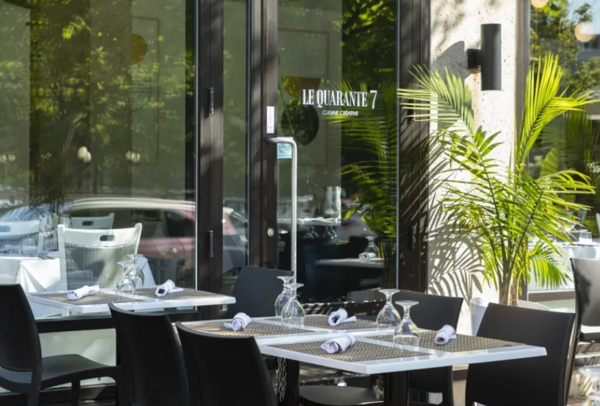
On the strength of its success and rapid growth, the fusion restaurant concept, offering 30 dishes from 30 countries, moved in 2003 to its current location, next to the Grand Théâtre, and became Le Quarante 7. This move allowed them to fully develop the concept and create a space worthy of its gastronomic ambitions, explains Yvan Ouellet, who runs a group of four partners.
Now celebrating 30 years, Le Quarante 7 remains a favourite gathering spot for food lovers seeking refined flavours. From its lively dining room to its custom catering, the mission stays the same: to honour the richness of its ingredients through carefully crafted dishes. Step through the doors and you'll discover the legacy of a passionate team that constantly reinvents itself to deliver a memorable experience. There are 35 to 40 people behind the scenes at 47, about ten of them in the kitchen.
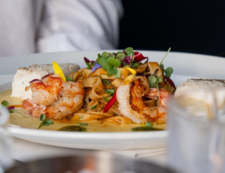
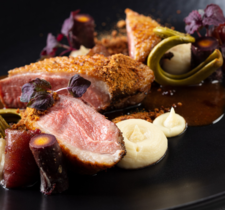
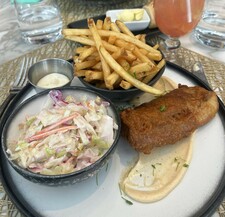
Ouellet attributes this longevity to several factors, including constant curiosity and close relationships with local producers. Over the decades, the menu has evolved to combine timeless classics with contemporary trends, ensuring an element of surprise on every visit. The wine list is rather impressive, as the immense glass-walled cellar commanding the dining room makes clear. Whether for a corporate event, wedding, intimate dinner or meal before a performance at the neighbouring Grand Théâtre, every plate reflects the team’s rigour and passion.
The restaurant serves lunch on weekdays and dinner from Wednesday to Saturday.
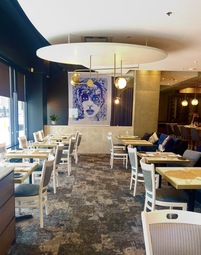
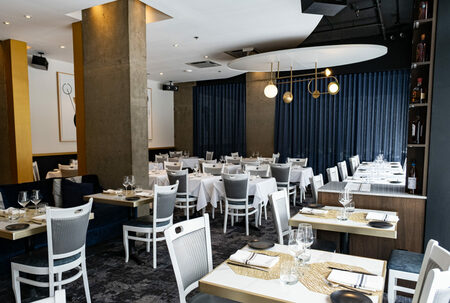
Catering now accounts for 70% of Le Quarante 7’s activity, with capacity for events of 200 to 500 people. The team travels with its own equipment and food and provides service on site. Options also include boxed lunches, cocktail receptions, buffets and banquets tailored to clients’ needs.
The traveller in Yvan Ouellet remains active as well: he continues to organize overseas group trips exploring renowned wine regions and culinary routes.

Throughout the year, the 30th-anniversary celebrations will include special events, among them a major contest offering $30,000 in prizes, including several cash awards and a trip for two to Bordeaux, France. The celebrations will culminate with the presentation of the winners at the 30th Anniversary Party at the Musée de la civilisation on October 1, 2026.

Restaurant Le Quarante 7
lequarante7.com
333, Rue Jacques-Parizeau
Québec, QC, G1R 5G2
(418) 692-4747
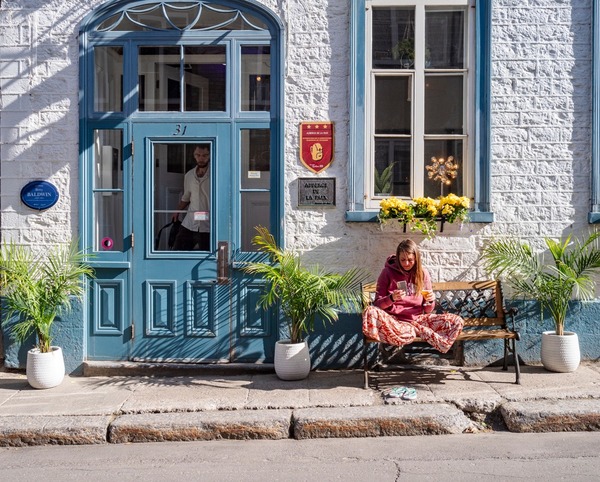
Some places just stick around. They become the kind of spot where people gather for good times, where every corner has a story. L’Auberge de la Paix on Rue Couillard in Vieux-Québec is one of those places.
It opened in 1972 as a youth hostel, born from the free-spirited energy of the 1970s. Back then, it was a non-profit, created to give travelers a cheap place to stay while keeping the doors wide open to the world. The idea was simple: a community space where young people and wanderers could crash, share stories, and figure things out together.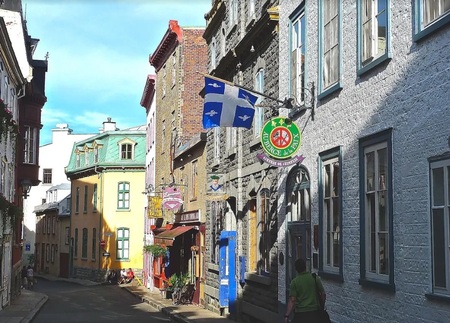
The hostel sits in a building from around 1850, right inside Vieux-Québec’s old fortifications, a neighborhood that’s now a UNESCO World Heritage site. The architect was Charles Baillairgé, the city’s go-to guy for design and engineering back in the day. The building even had a carriage passageway so horses and wagons could pull straight into the back courtyard.
Then came COVID-19. The hostel shut down completely in 2020, and the non-profit couldn’t keep going. The team didn’t have the money or the manpower to keep the doors open, so they had to call it quits in March 2023.
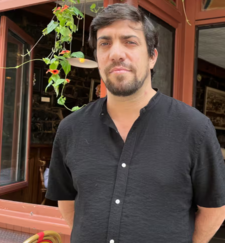
That’s when the owners of the café next door, Chez Temporel, stepped in. Mélissa Spénard-Lefebvre and Louis-Charles Tremblay (photo) decided to take over. They swapped their café hats for innkeeper ones, keeping the hostel’s spirit alive but running it as a business now. Their background in real estate and their love for Vieux-Québec’s history made the leap feel right.
The hostel reopened in May 2023, just in time for tourist season, and just over 50 years after it first started. Since then, they’ve poured more than $300,000 into renovations, safety upgrades, and sprucing the place up.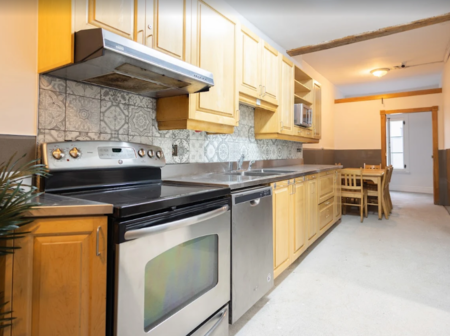
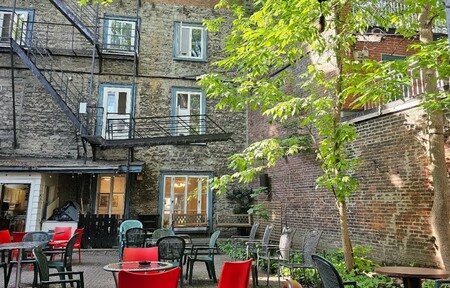
Today, it sleeps about sixty people in a mix of dorms and private rooms. The vibe is still the same, friendly, easygoing, the way hostels should be. And don’t assume it’s just for backpackers. Families stop by for short stays, and a lot of the guests are retirees who like things simple and enjoy a good conversation.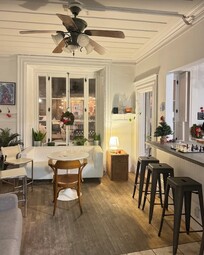
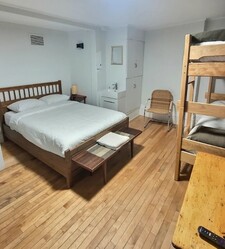
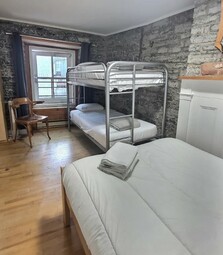
The hostel has everything you’d expect: a shared kitchen, a big common room, a nice courtyard, free Wi-Fi, and underground parking just two minutes away.
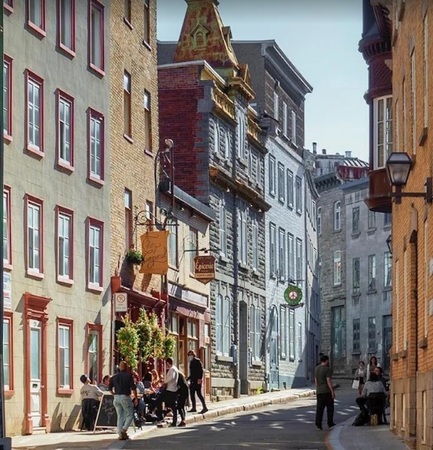
It’s also in a great spot. There are cafés and restaurants all around, including Chez Temporel just two doors down, plus a grocery store right next door. The new owners have added modern touches like digital locks with unique codes, so everyone feels safe.
Auberge de la Paix
aubergedelapaix.com
31 Rue Couillard
Québec, QC, G1R 3T4
418-694-0735
At the entrance to the Manicouagan Peninsula, near the beginning of chemin Principal in Pointe-aux-Outardes, visit the Argile Eau Mer cosmetics shop. It showcases sensitive marine clay extracted beneath a peat bog beside the Saint-Laurent, a product found nowhere else in the world that helps maintain healthy skin. 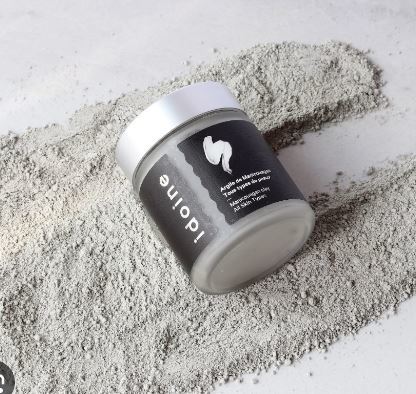
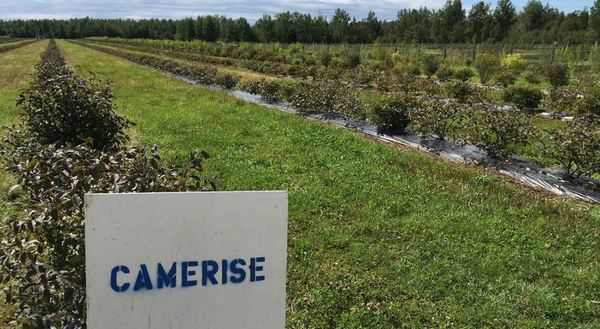
In Pointe-Lebel, make a stop at the improbable Ferme Manicouagan. Unexpected in the middle of the boreal forest, this farm is an emerging leader in camerise (haskap berry) production. Because the crop is well suited to the uncertainties of northern climates, Côte-Nord farmland is ideal for growing it; the cooler temperatures produce sweeter fruit. You must try the camerise mousse, a genuine delight. The farm also specializes in strawberries, raspberries and corn. Its farm stand offers abundant freshly picked vegetables, a wide range of prepared products and pick-your-own produce.
In Hauterive, Boucherie les trois p’tits cochons offers high-quality products, and its tartare bar is a must in the region. For a quick meal, customers can choose from a whole range of ready-to-eat items: salads, sushi made fresh daily, house-smoked products and jerky. Several varieties of fresh sausage and many other products prepared on site will also satisfy the appetite. The butcher’s products are available at Marché des Dunes near Parc Nature de Pointe-aux-Outardes. 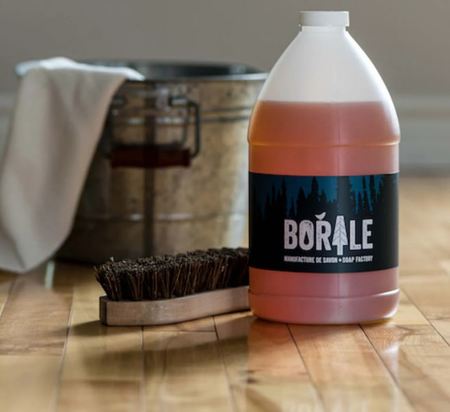
On reaching central Baie-Comeau, visit the Manufacture de savon Borale shop and discover refined soaps and beauty products carefully made by its master soapmaker. Evoking the character of the boreal forest, the soaps are produced through a traditional full-boil process in a vat followed by washing of the soap paste, yielding a superior-quality product.
RSS Feed
SubscribeCategories
- Test (0)
- Hotel and logging (28)
- Winter sports (2)
- Theater (1)
- Destination (23)
- Things to do (26)
- Eat and Drink (37)
Tags
Latest Posts
- La fille d’elle-même
- From worst to best
- Second Pride march in Cowansville
- A Pride day in Sept-Îles
- Les Salons d’Edgar: Nearly 30 Years and Still the Heart of Saint-Roch
- Diner Saint-Sauveur: Where Québec’s Comfort Food Gets a Retro-Punk Twist
- Laval's Black Forest: the charm of yesteryear with today's tastes
- Restaurant Le Quarante 7 celebrates 30 years of fine dining in 2026
- L’Auberge de la Paix: How a Counterculture Hostel Became a Québec Classic Over 50 Years
- Clay and terroir in Manicouagan