Travel log

coucher du soleil

Archive for 2026

The shop at Cidrerie et Vergers Pedneault is an excellent showcase, not only of the diverse products this family artisan makes and distributes, but also of the art of cider making, which many people know little about. There, you'll find detailed information on the process of creation and production, from apple cultivation to bottling.
Visitors are quickly drawn to the many displays and colourful labels of the roughly 30 different products, grouped into various categories: mistelles, crèmes, sparkling, fruity stills, ice cider, aperitifs, and more. Two products really got our taste buds going: the maple apple, with its delicate, subtle flavour, and above all the star still unrivalled today, Glacier, which has won several awards at wine fairs.

Cidrerie Pedneault cidres

Even the newcomer, Marée Rose, reveals more than 100 years of apple cultivation by the Pedneault family on the island. It is the first rosé cider, with a fine, vivid red colour thanks to the Geneva apple, which makes up 100% of its raw material.
On site, they take the time to offer tastings and thoroughly explain the range of varieties on offer. Teaching wine enthusiasts helps restore cider's prestige with many visitors to the shop.
Rising demand in recent years has led to shops opening in La Malbaie, Baie-Saint-Paul, and Québec.
Worth noting: you can pick your own apples, pears and plums in the orchards in autumn.

Cidrerie et Vergers Pedneault
vergerpedneault.com
3384, chemin des Coudriers
L’Île-aux-Coudres, Qc G0A 3J0
418.438.2365

The Le Manoir du spaghetti banner had a presence in Québec and Trois-Rivières for many years from 1978, while partners ran three branches (Charlesbourg, Ste-Foy), all housed in Canadian-style homes with a historic character.

 
Since 2016, only the restaurant in the Maison Hart in Trois-Rivières now bears the Manoir du spaghetti name. Pierre Plante, the sole owner, runs the business there with pride. He had been a chef there, as well as at the other two branches, for several years. That venture led him to become a shareholder, along with family members, before finally buying the Trois-Rivières restaurant in 2001.

Le Manoir du spaghetti
So you could say Pierre Plante carries the DNA of the Manoir du spaghetti in his veins.

 
On Hart Street in Trois-Rivières, in the heart of the historic neighbourhood of the second-oldest French-speaking city in America, you'll notice the heritage house that has housed the restaurant Le Manoir du Spaghetti for 35 years. It was acquired from Jean-Louis Caron, the architect known for his work on the construction of the Trois-Rivières cathedral.

Le Manoir du spaghetti
This authentic Canadian house has seen the joys and sorrows of several notable families from the city founded by Laviolette nearly 400 years ago, on July 4, 1634, including that of Ézéchiel Hart. He was the first Jewish deputy elected in Canada.


“It is therefore in a clearly historic and heritage setting that customers can enjoy the Italian cuisine of Le Manoir. The cuisine has evolved over the years, but it has brought back several of its original classics that made its reputation at the time, such as pasta trios, pasta and pizza combos, and more,” explains Pierre Plante.

Le Manoir du spaghetti
With its warm, festive atmosphere, attentive service and distinctive menu, it’s a must-visit in Trois-Rivières. It’s just a stone’s throw from the historic district, the old port and the bustling shops and bars of rue des Forges. The wide choice of pasta and pizza is hard to resist, and the wine and beer selection is just as surprising. For dessert, what sets the place apart is the ice cream bar, a concept adapted from a Florida restaurant, which always delights young and old.

 Le Manoir du spaghetti
You can also buy various sauces, dressings, soups and other products online to keep the experience going at home.

 
Like a good family man

Pierre Plante is happy and proud to lead a team of about twenty employees who form a small family. All the more so since, with one exception, no one left their job during the stretches of the pandemic when the dining room was closed. "I look after my people. If someone works here, it's because I like them from the start. During the pandemic, I kept being attentive and looking after everyone. We shared food when some were having a hard time," he explains.

Le Manoir du spaghetti The owner, Pierre Plante. (Photo: Pierre Perreault)


Le Manoir kept up takeout orders almost all the time Public Health allowed it. That let some kitchen staff, among others, keep working.

No wonder, then, that staff turnover is so low. Tenure ranges from 1 month to 38 years.

 
It's pretty much the same with customers. People come back. The vast majority come from Trois-Rivières and the surrounding area, even from the rive-sud. Others are travellers passing through between Montréal and Québec, tourists getting off cruise ships in summer, or conference attendees and business people gathered in the city's hotels. “Sometimes we serve the children and grandchildren of customers who had been coming here since the beginning.”


Pierre Plante, a cook through and through, insists on the quality of the ingredients that go into the dishes served to customers. “Never lower the bar. Always keep the best products in each category. That’s what sets us apart and what pleases our customers,” he says.

Le Manoir du spaghetti
In addition to the spacious dining room spread across various ground-floor areas, Le Manoir has a superb, well laid-out and intimate terrace at the back, during the warm months.


Le Manoir du spaghetti
manoirduspaghettiv3r.com
1147, rue Hart
Trois-Rivières (QC)
819 373-0204

The oldest fine-dining restaurant in the city of Québec has been housed since 1956 in a house built in 1845 by the Honourable Jean-Thomas Taschereau, a judge of the Supreme Court of Canada. In Governor Frontenac’s time, rue Saint-Louis had already become the most prestigious residential street in the Upper Town. The street ran from the governor’s château and had been named in honour of the Crusader king, the good Saint Louis.


Today, with 140 seats across two floors, Le Continental continues the tradition of its Italian founders, the brothers Angelo and Luigi Sgobba, but with a signature take on high-end classic French cuisine. Proudly fitted out, the decor of the historic Taschereau house almost makes you feel you’re aboard a vintage cruise ship. Rich, warm wood panelling, silverware, immaculate tablecloths and table lamps immerse diners in an intimate, hushed atmosphere.

 
For decades, Le Continental has welcomed celebrities from the worlds of film, music, sports and politics, both from here and from elsewhere. Nearly all Québec premiers have had their own table here, as have several Canadian prime ministers.
Le Continental also describes itself as “the restaurant for life’s milestones,” whether it’s a graduation, an engagement, a wedding, a wedding anniversary, a promotion or any occasion to gather guests and celebrate. It is also not uncommon to serve third-generation customers here.

Le Continental
In 2010, Mathieu Pettigrew and his partners acquired Le Continental. Mathieu had already been working there since 1993. Their goal at the time was to make the most of tableside cooking, one of the key elements of its success.


The varied, gastronomic menu includes specialties such as continental filet mignon, veal sweetbreads flambéed in Madeira, or langoustines flambéed in whisky. A four-course table d’hôte is also offered, with quite respectable value for money. Two attractive private dining rooms are available to guests.

Le Continental
The highlight remains the only tableside service. Flambés come as a bonus, offering the luxury of dishes prepared and cooked at the table. These artists are trained on site to flambé dishes in the restaurant’s tradition. Product quality and authenticity are at the heart of management’s concerns. The wine cellar, too, impresses with some 12,000 bottles and 300 French, Italian and Californian appellations, from the most affordable to the finest grand cru classé.

 Le Continental
Though the menu has hardly changed in 50 years (customers like it that way), it is revised twice a year and adapted to the availability of ingredients. No effort is spared to ensure consistent quality and satisfy both new customers and long-time regulars.

 Le Continental
Worth noting: back then, the Continental’s kitchen was in the basement. Today, it’s combined with that of its next-door little brother, the Conti, with a single kitchen team.


Le Continental is open year-round, seven days a week, for dinner. Together, the two restaurants employ 75 to 80 people.


A story that still inspires today
From the early 1800s, when the courthouse was installed at the corner of place d’Armes, many lawyers settled on rue Saint-Louis. That is how the house now occupied by Le Continental restaurant came to be built in 1844 for lawyer Jean-Thomas Taschereau. At 30, he moved into the new house with his young wife and their first child. Fortunately, the young lawyer Taschereau had a large house built for himself. Five children were born of his first marriage, and seven more came with his second.


His talents and good reputation won him appointment as a judge in 1855. That same year, he also became a part-time professor at Université Laval. In 1878, Judge Taschereau was elevated to the eminent position of judge of the Supreme Court of Canada. However, his health grew increasingly frail, and he retired in 1888. He spent his final years in his home on rue Saint-Louis, where he died in 1893, the very year the Château Frontenac was inaugurated not far away.


Steeped in this history, Le Continental has welcomed guests since its earliest days. It was opened by Italian brothers Angelo and Luigi Sgobba, along with their friends Luigi Giacomello and Stephano Degan, after a six-month journey in Québec. Upon arriving in Québec, it was love at first sight.

Restaurant Le Continental
restaurantlecontinental.com
26, rue Saint-Louis
Vieux-Québec (Qc)
418 694-9


When arriving via Highway 170, which cuts through the entire city of Saguenay, the Delta Saguenay Hotel stands out with its impressive height and sprawling footprint, acting as a welcoming beacon. This sets the tone for what its management offers to visitors, whether for family vacations in the region, a brief work trip, or an event or business meeting at its conference center.


Located in the Jonquière sector of Saguenay, this 4-star Marriott hotel caters to both families and business travelers. It sits slightly outside the city center and away from the Saguenay River, 26 km from Bagotville Airport, which serves the region. With its Boston Pizza restaurant, newly added indoor pool, and fitness center, the Delta Saguenay is one of the premier hotel establishments in the area.

Delta Room 1 Delta Room 1
According to the hotel’s General Manager, Olivier Fortin-Tremblay, investments made by the owners since 2012 have transformed it into a unique location in the region. The refined rooms include amenities such as a desk, ergonomic chairs, free Wi-Fi, flat-screen TVs, coffee makers, and mini-fridges. Some rooms feature bathtubs, while others have walk-in showers. Suites additionally include a fridge, microwave, dining area, fireplace, and sofa bed.

Delta Room 1 Delta Room 1
All rooms were renovated in 2012, drawing inspiration from the Canadian landscape with a refreshing and modern color palette and maximized use of natural light. Previously owned by an Ontario financial group, the Delta Saguenay became locally owned in 2017, led by businessman Laval Boulianne with support from the regional FTQ Solidarity Fund.


In 2018, the franchise managers invested in building a restaurant near the main lobby entrance, followed by a $1.2 million investment in a two-story annex housing an indoor pool with a spa and sauna, as well as an interactive playroom. These upgrades, operational since 2020, were necessary to attract more families, according to the General Manager. While maintaining its business focus with the conference center, the building now also offers a recreational purpose.

Delta Saguenay
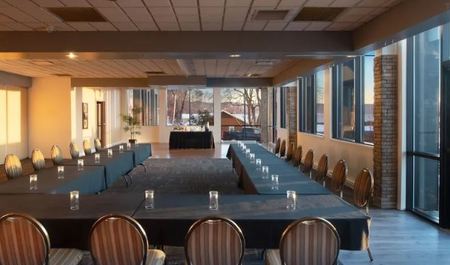
The Delta conference center boasts spacious rooms with all the necessary logistics for major events: 17 conference rooms and a ballroom spanning 11,660 square feet. The venue is highly regarded for the quality of its facilities and professional services provided to organizers of various events and meetings.

 Delta Room 1 Delta Room 1
Of note, the Delta Saguenay also welcomes snowmobiling enthusiasts during winter, given its proximity to major regional and provincial trails. Additionally, the management practices an inclusive guest policy for all visitors.


In fall 2023, the hotel owners hinted at plans to improve the region's accommodation offerings, which are deemed insufficient by local tourism development stakeholders. Studies show that event attendees prefer to stay onsite. The Delta Saguenay currently offers 160 rooms, with plans to increase to 200 by adding a new tower on businessman Laval Boulianne’s property. This project could be realized by early 2024.

Hôtel Delta Saguenay

Website

2675, Boul. du Royaume
Jonquière, QC G7S 5B8
(418) 548-3124

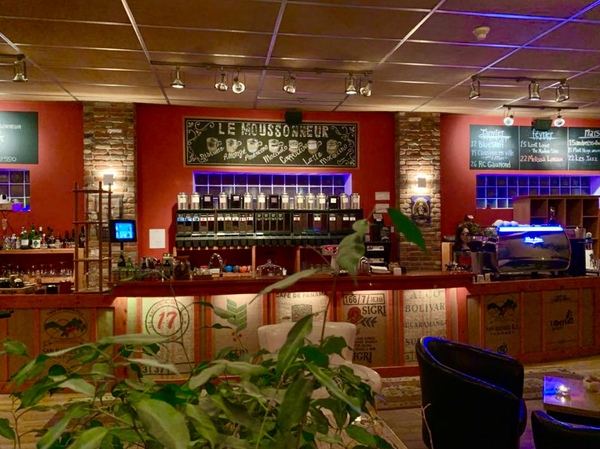
In Rimouski, on rue Saint-Germain ouest, the façade gives very little hint of what awaits visitors. Inside, there is a spacious, cozy area with small armchairs around a coffee table and a bistro section. At the back, a large room with subdued lighting is where small groups gather to chat or meet while enjoying the roaster’s unique, specialized products.

Then there’s the large counter. Behind it, you’ll find two dozen silos filled with a variety of coffee beans, ready to take away, ground to the customer’s taste, or enjoyed on the spot in a range of choices and formats. Thanks to a team of trained, knowledgeable baristas, all of this is possible.
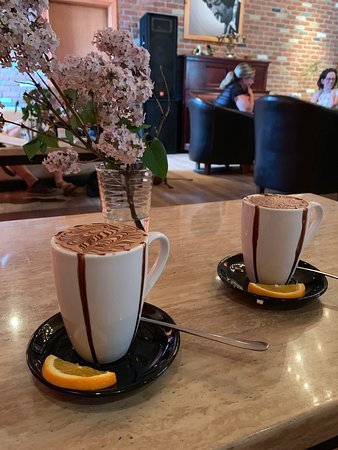
'We don’t serve meals,' explains Nathalie Gagnon, the general manager. 'We also serve coffee, tea, microbrewery beers, wine, and pastries from a local shop. You can bring your own lunch and heat it up. Occasionally, we host art openings, conferences, or performances.'

Moussonneur

Roasting at the heart of the business
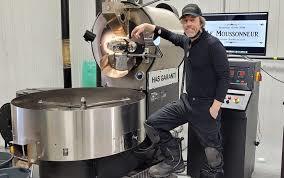
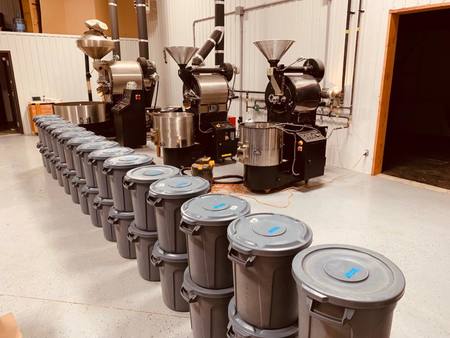
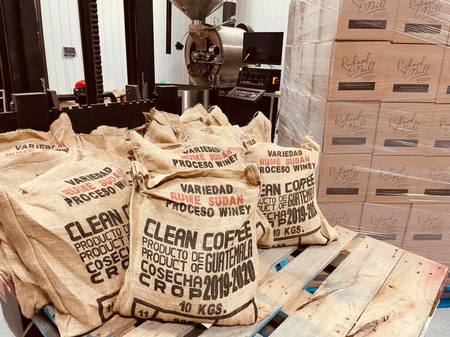
Le Moussonneur isn’t just the place described above. It’s also, and above all, a company that imports and selects coffees from around the world. It runs one of the best-equipped roasting workshops in Rimouski’s industrial park, thanks to more than 32 years of expertise from Richard O’Neil, Nathalie Gagnon’s partner.

Moussonneur 

The name of this Rimouski company comes from the term ‘moussonné’, which is in fact a range of coffees that Le Moussonneur has made its specialty. In fact, unwashed green coffee that has been exposed to humid air so that it absorbs water, swells, and changes colour until it turns light golden brown is called moussonné.

The star of this range is the Moussonné des Îles-de-la-Madeleine, a green coffee soaked in the Islands’ seawater, then dried in the sun and salty winds before being roasted as orders come in. Why such a wild idea? “Because the sodium from the sea, crystallized inside the bean, blends with the coffee’s oils during roasting. This creates a reaction that greatly reduces the acidity of the other coffees it is mixed with, and brings out their specific aromas, which we would not discover without it,” explains Richard O’Neil. The process was discovered in the 17th century. These coffees are recognized for their finesse, superior flavour and velvety texture. To develop these exceptional coffees, Richard O’Neil didn’t just draw inspiration from nature. He built it into his process.

Moussonneur Moussonneur
With his unique approach to selecting and roasting single-origin coffees, artisan roaster Richard O’Neill knows how to achieve exceptional and remarkable flavours. He also visits the plantations himself to better understand the daily life of the producers, their specific methods and the distinct environment surrounding each crop.

He also develops several blends, known as the Incontournables, with prized, perfect and unmatched flavours that appeal to discerning connoisseurs. The workshop also produces coffees for grocery chains and restaurants.

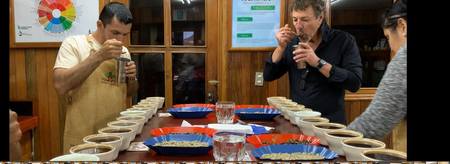
Also, Privé coffees are those that score above 87 on the 100-point scale defined by the SCA (Speciality Coffee Association). This score is based on several criteria: aroma, body, acidity, balance, aftertaste and cup clarity. Everything is taken into account, from room lighting to water pH and bean moisture levels, to ensure uniform tasting results.

Only by discovering these details and the roaster’s working methods can one say that the roaster is to coffee what the sommelier is to wine.

Moussonneur

The future looks promising
This profile would not be complete without mentioning Cold Drip Brew, a new product that occupies a particular niche. It is cold-brewed using an artisanal Japanese drip-by-drip method, in the Kyoto style. The process yields a coffee of exceptional richness, allowing the flavours and aromas specific to each single-origin coffee’s terroir to develop. It is available in ready-to-drink cans, or can be mixed with alcohol or a fruity drink, over ice for example.

In recent years, coffee-based cold drinks have become increasingly popular in the United States and Canada during the summer months. Cold brew has grown exponentially over the past decade. Alongside it, “cold drip” coffee has also taken off, and the two share essential similarities and differences. Le Moussonneur uses this method to produce its five varieties, including Costa Rica Terrazu and Jamaica Blue Mountain.

Moussonneur

In addition, in autumn 2024, Nathalie Gagnon will open a coffee accessories shop at the entrance to her business, including coffee makers, cups and other relevant and exclusive items. She will also run training sessions for coffee enthusiasts on machine use, brewing techniques and other topics related to coffee and its particularities.

Le Moussonneur will also develop a commercial division to supply restaurants, hotels and various establishments that serve coffee to their customers. An expert in the field has partnered with the company to coordinate this service. Whole bean coffee in bulk bags will also be available there.

Le Moussonneur employs a team of four people at the workshop, plus a few baristas at the downtown café.

Le Café du Moussonneur
lemoussonneur.ca

173, rue St-Germain Ouest
Rimouski (Qc) G5L 4B8
418 721-7776
.

In February 2002, YinYan opened in the food-loving downtown of Rimouski. Its owners and partners, Yan Hallé and Dany Roy, set out to open the first sushi bar in eastern Québec. Their mission was to introduce sushi and Oriental cuisine to the Bas-St-Laurent region. Today, the restaurant employs 14 people.

Yin Yan SushiYin Yan Sushis 2


Because cooking and sushi are an art, they consider it very important to respect Oriental techniques and tradition in all their beauty and magic. What they practise is, in fact, a balanced cuisine.
Well placed in the restaurant and shop district on rue Saint-Germain, Yin Yan puts its Asian know-how on display for the greatest pleasure: indulgence, says Yan Hallé.
From 2 p.m., a team is already preparing everything needed to serve customers in the early evening, whether in the dining room or as takeout orders. You have to see them buzz around like a little beehive to have everything in place before customers or orders arrive.

Yin Yan Sushi Soir

Sushi lovers will find exclusive varieties here, as well as a list of wines and spirits. The menu includes soups, tartares, various Asian dishes, Poké bowls and more. Yin Yan also offers catering. The restaurant, too, supports local artists by displaying several of their works.

Yin Yan: balanced cuisine
yinyansushi.com
61, rue Saint-Germain Est
Rimouski (Qc) G5L 8W2
418.725.2233


For many, mead is a drink of the gods, often portrayed as such in fantasy tales and legends, among others. But Québec produces excellent mead, including that from Hydromellerie du Vieux-Moulinin Sainte-Flavie.
Known and appreciated by the Greeks and Romans, mead later spread to the Gauls. Made by fermenting water and honey in widely varying proportions, this drink of the gods was popular with both families and religious communities in the Middle Ages. It remained widely drunk in Europe until the 19th century. In Norse mythology, the Valkyries fill the horns with mead at the feast of the gods.
Normand Tremblay, who founded this family business 26 years ago (in 2022), has been producing honey for over 40 years. At first, he sold in grocery stores and local businesses. But when the idea of producing mead came up, they needed a building that could house a shop as well as production equipment. In 1995, the family acquired an old flour mill built in 1830, which they’ve occupied ever since.
Nicolas, the founder’s son, now runs the business.
The fabulous honey wines made and produced here have won gold medals several times at various competitions (wines and spirits of the terroir). In the shop, you’ll find many honey products and an observation hive. 

Hydromellerie du Vieux Moulin

Tucked away upstairs is the Musée de la Neufve-France, featuring heritage treasures from Nouvelle-France and exceptional First Nations artifacts, the result of Normand Tremblay’s passion for collecting since the 1970s. Definitely worth seeing if you visit the shop.


Hydromellerie du Vieux-Moulin
vieuxmoulin.qc.ca

141, route de la Mer
Sainte-Flavie, Qc G0J 2L0
418.775.8383

Commercial, hospitality, and tourism activities tied to the Baker family name remain part of Gaspé’s economic and historical landscape today. Few people, though, know the long, winding path that has marked its history for over two centuries.


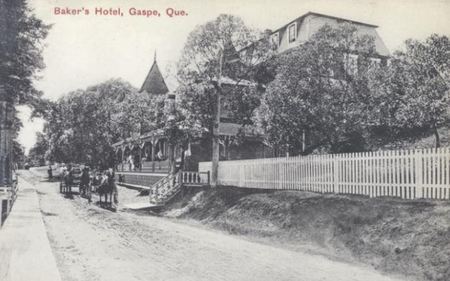
John Baker (1851–1930) first went into business in 1879, a few years after his father, John Baker Sr, moved from the Gaspé Peninsula and settled downtown. He then opened a tavern at the tip of the Vieux-Port de Gaspé. Two years later, with the tavern thriving, John Baker bought two lots on rue de la Reine (then Queen Street) from Ernest Tëtu. He built a Victorian-style building there and named it the Hôtel Baker.

Hôtel Baker
Afterwards, many events and upheavals (including the world wars, fires, deaths, and significant legislative changes in Québec related to private salmon fishing clubs) influenced the life of the Hôtel Baker. The 1920s were prosperous years. According to some accounts from the time, the Hôtel Baker’s ballroom was very popular between 1920 and 1929, during the Roaring Twenties. The lavish costume balls held there drew the Gaspé aristocracy of the day.


By then, John Baker owned three buildings: the One Ash Inn and Baker’s Lodge, which mainly served fishermen and hunters, while the Hôtel Baker primarily accommodated tourists and commercial travellers. John Baker died in October 1930 in Waterloo, Ontario. His estate was divided among his three great-nephews, and management passed to William Baker. The Baker empire eventually ran into trouble, largely because of new government legislation that in turn eliminated private fishing clubs, replacing them with provincial reserves. The hotel and Baker’s Lodge were sold. William Baker died mysteriously at the One Ash Inn in March 1956, of a presumed heart attack.


This would spell the end of the Baker family’s reign in Gaspé’s hotel industry after more than a century. In May 1974, the Hôtel Baker was sold once again to a group of businesspeople from Gaspé, including the current owner, Roger Denis. In a grim twist of fate, Baker’s Hotel burned down on 31 July 1975. A few months after the fire, the same group of investors decided to take on the construction of a new hotel on the same site as the old Hôtel Baker.

 
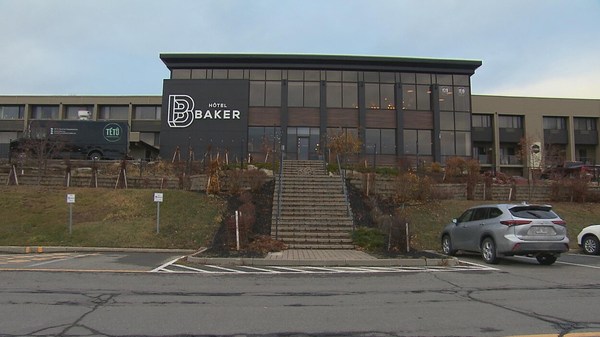
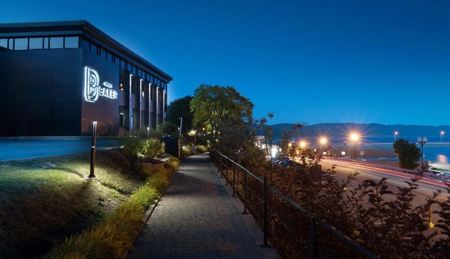
Perched on an exceptional site overlooking the Sud-Ouest basin of Gaspé Bay, the building opened in June 1978 as the Auberge des Gouverneurs. It had 44 rooms, along with the 12 motel units previously built as an addition to the Hôtel Baker.

Hôtel Baker
So it’s quite a saga, partly recounted here, that preceded the arrival of the current owners. The general manager, Pascal Denis (also a shareholder in the company, along with other family members), is proud to have maintained Québec ownership of the establishment.

 
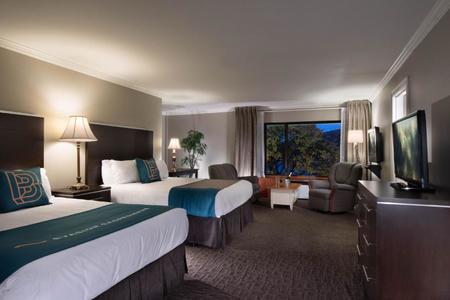
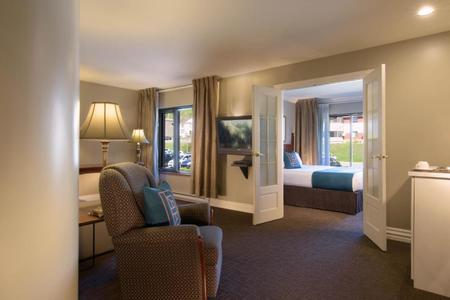
Since 2001, major changes and expansions have confirmed the hotel’s position as a leader in hospitality, dining, and conferences in Gaspésie. These took the form of 14 new rooms, a 102-seat cinema, as well as the expansion of the conference rooms and of the Têtu restaurant. “In addition to our many services, our aim was to become a destination in its own right, and we’ve now achieved that, year-round,” explains Deputy Director Christine Cabot. She also points out that each year, upgrades and maintenance work keep equipment of superior quality in the five room types on offer and elsewhere in the property.

Hôtel Baker Hôtel Baker
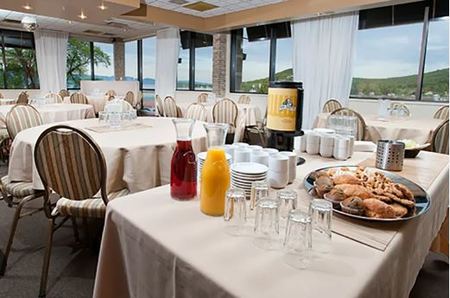
As for the restaurant, the Gaspésian tavern Têtu aims to be a hybrid of a family restaurant and a sports bar, in a warm and unpretentious atmosphere. Its name, as you may recall, evokes that of Ernest Têtu, the owner of the land where the hotel was built. To give diners a taste of Gaspésie and of Québec more broadly, they revisit culinary classics for a flavourful experience. No wonder the dining room is constantly full.

Hôtel Baker  Hôtel Baker
As for the cinema, the management wanted to fill a gap in Gaspé at the time, for the enjoyment of the local population as much as of hotel guests. A popular film is screened each week. The schedule is posted on the website.
Finally, the hotel is frequented by groups of tourists arriving by bus. In winter, groups of snowmobilers and ATV riders arrive via the trails to stop over for a rest and a meal.

Hôtel Baker
hotelbaker.ca
178, rue de la Reine
Gaspé (QC) G4X 1T6
418-368-3355

David Soucy is a forestry engineer. Yan Lévesque is an electromechanical engineer. A certain evening over scotch in 2016, so to speak, gave rise to a project. It grew out of a shared passion for spirits, a creative dream and a desire to take part in their region's development.
For more than two years, they developed the concept for their distillery, taking care to make informed and logical choices. Since water is the foundation of production, they decided that water from the Mitis River would best meet fermentation requirements and produce a product that measures up to fine spirits industry standards. The choice of location followed from that decision: near the river, in Mont-Joli.

Distillerie Mitis
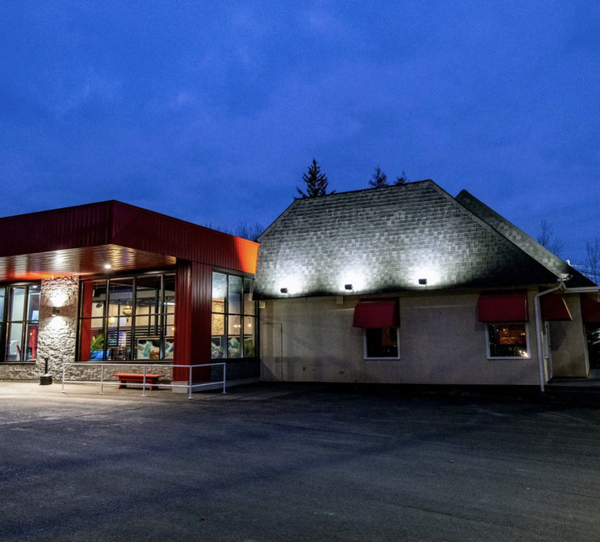
The product creation process, in line with their values and quality standards, requires partnerships with local businesses and organizations that specialize in their field. Jardin de Mitis (mountain pine) and Ma cabane en Gaspésie (concentrated maple sap) are two examples, among others.
Distillerie Mitis
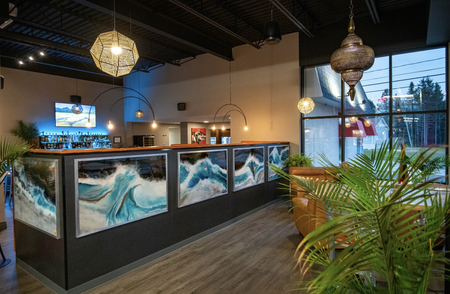
The specialized equipment that makes up the still was designed and built according to Yan's concept (Yan is the team's mechanic). This equipment accounts for a large share of the final result once the various ingredients are blended. Aging in oak barrels is also an important factor in the rum's quality. Maceration in selected, toasted Québec wood, such as sugar maple, yellow birch and apple, is paired with French and American white oak to produce a balanced, lively and woody spirit: Mitis.
Frimas vodka was launched in June 2022, flavoured with Québec sea buckthorn fruit! Slightly fruity and tart, smooth and mellow, it can be enjoyed neat, on ice or in cocktails.
The shop at the Mont-Joli distillery also stocks a few branded items for enthusiasts. Worth a visit if you're passing through the area.

Distillerie MitisDistillerie Mitis
distilleriemitis.com
1034, avenue de la Gaspésie
Mont-Joli, QC G5H 0B2
418.775.4011

Nadia-Karina Minassian and her partner took over the Motel Fraser in Chandler in 2010. Twelve years later, they’re proud of what they’ve accomplished. They have made it a leading hospitality and dining destination in the area, thanks to major investments in renovating and upgrading the reception, accommodation and dining facilities.

The general manager stresses that the work was carried out with local products, materials and artisans.
The hotel has 30 rooms and two neighbouring guesthouses. The rooms have been substantially renovated over the years. The restaurant le Sieur de Pabos has also been improved, on the kitchen side as well as in the dining room. The menu offers contemporary regional cuisine highlighting local and fresh produce. The hotel has also fitted out three meeting rooms. It is open year-round.

Motel Fraser
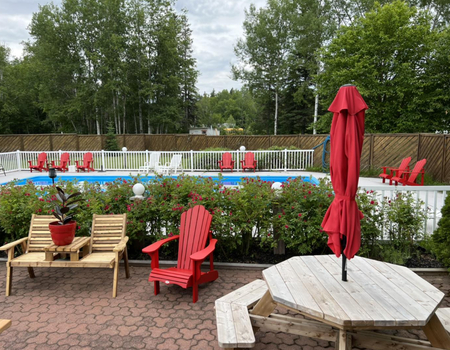
For the past three years, including during the COVID pandemic, the hotel has developed on-site activities with entertainment, while visitors, especially families, could not enjoy activities elsewhere in the region, as everything had been put on hold. This continues and will remain on the program, notably at the hotel’s pool.

Motel Fraser
The company’s general manager is a well-known figure in the region. With a degree in regional development, she has worked as a business restructuring consultant, as well as serving as president of Tourisme et commerce de la MRC de Percé. More recently, while running her hotel, she held the post of prefect of the MRC de Rocher-Percé, as well as serving as president of the Table des préfets de Gaspésie.
Nadia is also taking part in a joint initiative with four other regional hotel managers to develop sustainable development strategies for their establishments, with the aim of obtaining certification. Motel Fraser, however, has already put several measures in place in this direction.

Motel Fraser
motelfraser.com
325, rte 132
Chandler (Qc) G0C 2J9
418.689.2281

RSS Feed

Subscribe

Categories

Tags

Latest Posts

Archives