Travel log

coucher du soleil

Archive for 2026

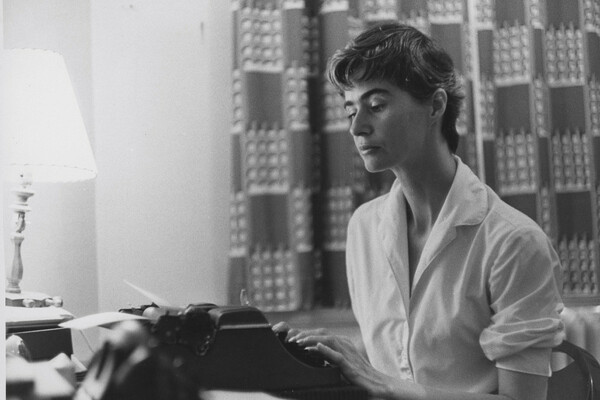
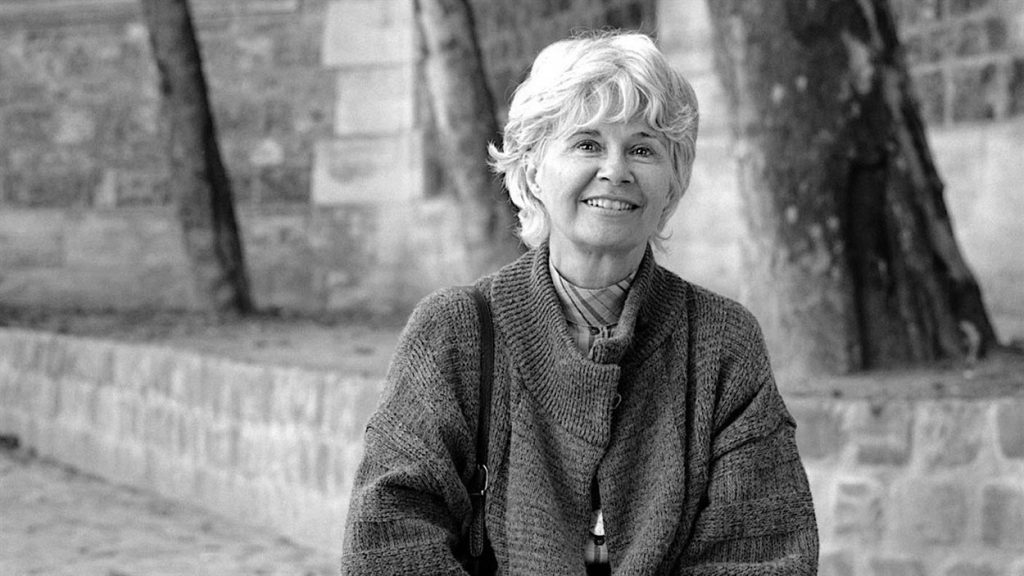
On August 1st, 2016, writer and poet Anne Hébert would have turned 100. Her centenary was to be commemorated in 2017 in Kamouraska, the village where her novel Kamouraska is set. The book made her famous and put the village on the map. Adapted for the big screen by Claude Jutra, with music by André Gagnon, the film introduced her work to the general public.

Anne Hébert was born in Sainte-Catherine-de-la-Jacques-Cartier and spent her childhood in Québec. But as a descendant of the seigneurial family of Kamouraska, she spent several summers there, where she became familiar with the famous crime of passion involving her ancestor. After publishing various poetry collections from 1942 to 1953, in 1958 she published her first novel, Les Chambres de bois, with Éditions du Seuil, and in June 1960 was elected a member of the Royal Society of Canada.

In 1965, after her mother’s death, she moved to Paris. She finally achieved success with the publication of Kamouraska in 1970, which earned her the Prix des libraires de France. In 1975 she published Les enfants du sabbat, her third novel, followed in 1980 by a fourth, Héloïse. Her fifth novel, Les Fous de Bassan (1982), made her the fourth French-Canadian woman and the second Québécoise to win one of France’s major literary prizes: the Prix Femina. She was preceded only by Gabrielle Roy, also a Femina winner, Marie-Claire Blais, winner of the Médicis, and Antonine Maillet, winner of the Goncourt. Between 1969 and 1983, she received honorary doctorates from the University of Toronto (1969), the University of Guelph (1970), UQÀM (1979), McGill University (1980) and Université Laval (1983).

In 1988, her sixth novel, Le Premier Jardin, paid tribute to the women who founded Nouvelle-France. A seventh novel, L’Enfant chargé de songes, appeared in 1992. In 1995, at the age of 79, she published Aurélien, Clara, Mademoiselle et le Lieutenant anglais, a story midway between poetry and prose. Her fifth and final poetry collection, Poèmes pour la main gauche, was published two years later.

Early in 1998, after 32 years in Paris, she returned to Montréal. In 1999, her last novel, Un habit de lumière, was published, a few months before her death in Montréal in January 2000.

Anne Hébert always remained discreet about her private life; she never married or had children. Living in Paris, far from home, enabled her to keep her artistic and private lives separate, as it did for her friend Mavis Gallant, an English-speaking Montréal writer who had also moved to the City of Light and with whom Hébert shared a long friendship.

The Musée des beaux-arts de Mont-Saint-Hilaire has a mission that distinguishes it from most Québec museums. Correlieu retrouvé, an exhibition by painter and author Mathieu Laca that opened on June 20 and runs through September 27, strongly advances that mission. It is a rare opportunity to mount a show directly aligned with the museum’s mandate, which includes preserving and showcasing the cultural legacy of Mont-Saint-Hilaire’s three masters: Ozias Leduc (1864–1955), Paul-Émile Borduas (1905–1960) and Jordi Bonet (1932–1979).
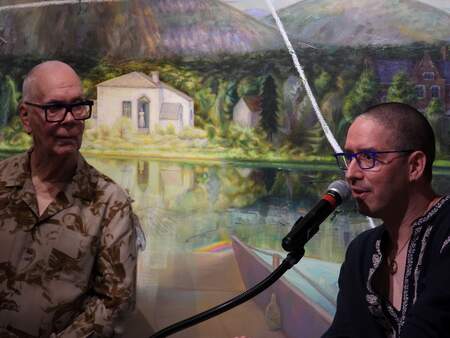
Correlieu retrouvé 2026Mathieu Laca and Jean Comeau at the opening.

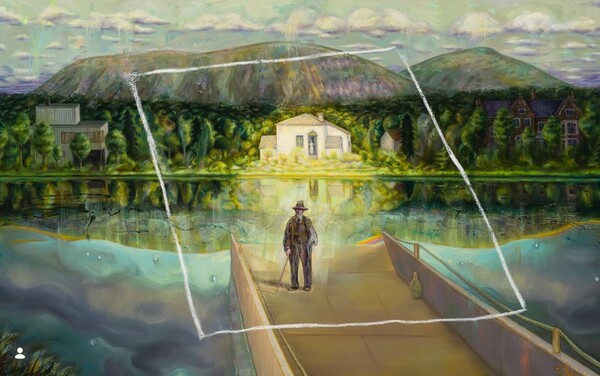
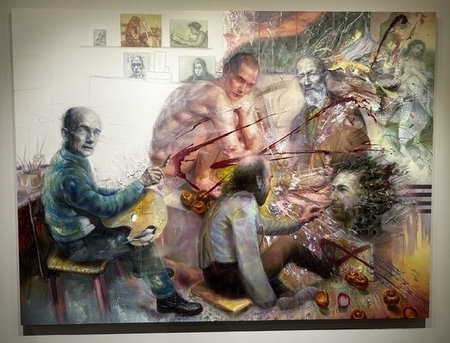
As part of the institution’s 30th-anniversary programme, painter Mathieu Laca’s exhibition brings these three major figures in Québec and Canadian history into dialogue. It draws on the legendary Correlieu studio, built by Ozias Leduc in 1890 and described as ‘a place where the heart is in everything’. The studio unfortunately disappeared in the 1980s after serving as a true meeting and exchange space for the artistic community from the late 19th century through the first half of the 20th. It also evokes the studio-homes of Bonet and Borduas through poetic scale models.

Together, the three artists lived in Mont-Saint-Hilaire across a span of 110 years. Leduc was born there and spent most of his life in the town. Borduas, also born there, became Leduc’s student as a teenager and later returned to build a house that still stands and is now part of the museum’s permanent collection. Among other works, he wrote Refus global there, denouncing the stifling narrow-mindedness of a Québec constrained at the time by traditional Catholic values. Jordi Bonet, born in Spain and established in Québec in the early 1950s, later fell in love with Manoir Rouville-Campbell and its Tudor Revival architecture beside the Richelieu. He acquired the badly deteriorated property in the early 1970s, lived there with his family and restored it room by room before having it classified as a historic monument in 1977.
Correlieu retrouvé 2026

Following a 2024 dinner in Saint-Hilaire with Jordi Bonet’s children, Sonia and Laurent, Mathieu Laca and his partner, Jean, fell in love with what he describes as an almost hypnotic environment. ‘When I arrived in the town, I was also struck by place names that make it feel like an open-air museum. You cross pont Jordi-Bonet and travel along chemin Ozias-Leduc, rue Paul-Émile-Borduas and rue de l’Heure-Mauve. I then discovered that the property where Ozias Leduc (1864–1955) lived for almost his entire life was only a stone’s throw away,’ he explains, setting out the origins of the project that followed.

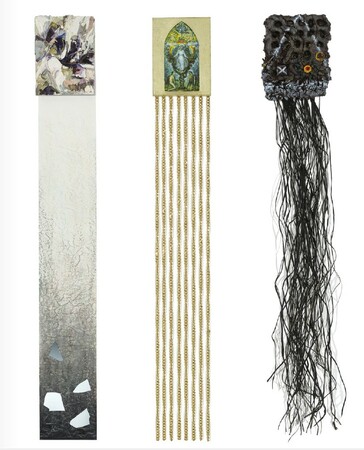
Through this original exhibition, Laca sought to offer a renewed perspective on the three artists and identify a defining theme in each body of work. Long, rigorous research allowed him to enter into their lived experiences and influences. In Leduc, he finds goodness, a quality that, according to the artist, might offer a path toward the divine. It seems to appear in the humility of Leduc’s subjects, including L’heure mauve, a half-snow-covered branch with dead leaves, as well as in his enveloping light and gentle brushwork. Borduas’s trajectory, in Laca’s view, was guided by a quest for freedom. Seeking release from the narrow morality embodied by religion, he continually pursued a pure, universal language through which to express the depths of his psyche and escape the constraints of figurative tradition. His work still resonates as a lesson in authenticity and sacrifice. Jordi Bonet’s life, meanwhile, was marked by profound tragedy: the Spanish Civil War, which ravaged his homeland from 1936 to 1939; the amputation of his right arm; and the death of his young son after he was struck by a car. Bonet developed part of his work as a way of transcending the limits of his condition, making visible what is hidden and what survives disappearance. Laca therefore assigns him the theme of mystery.
Correlieu retrouvé 2026

‘Through these three central themes, Mathieu Laca directs his work toward new interpretations and techniques while delving into art history to nourish his research, demonstrating the rich potential of a heritage that remains as significant as ever,’ says Etienne Ardaens, assistant curator at the Musée des beaux-arts de Mont-Saint-Hilaire.

An Unexpected Discovery
While conducting extensive research on Leduc, particularly in his archival fonds, Laca made a discovery that transformed his perception of the artist. Numerous clues tend to point to a forbidden love between Leduc and a young Saint-Hilaire poet named Guy Delahaye, a biographical possibility not previously addressed in books about the painter. Leduc’s marriage at age 43 to an older first cousin, abandoned by her husband and later widowed, had first raised his suspicions.
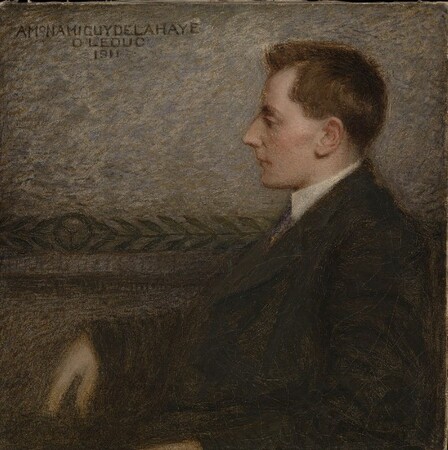
Correlieu retrouvé 2026Guy Delahaye, Leduc’s alleged lover, painted by the artist. (MBAM)

The absence of any portrait of Leduc’s wife from his work also led Laca to consider the marriage one of convenience. Alongside the exhibition, he began writing a book on the subject, knowing the information opens an entirely new interpretation of an oeuvre whose symbolism may be less mysterious than it appears.

The prohibitions of the period prevented any love between Leduc and Delahaye from being fully realized. In 1910, homosexuality was condemned by the Church, criminalized by law and characterized by psychiatry as a form of ‘mental illness.’ Despite that climate, Leduc painted superb portraits of Delahaye, with dedications inscribed directly on the canvases. Laca was overwhelmed on discovering the portrait held by the Musée des beaux-arts de Montréal, in which the young poet appears in profile like a medallion of Ovid, accompanied by Erato, muse of lyric and erotic poetry. To him, it resembles a barely concealed declaration of love.

Although the relationship developed into friendship, the two continued corresponding and meeting regularly throughout their lives to discuss art, philosophy and science. Leduc later produced imaginary landscapes expressing his inner states.
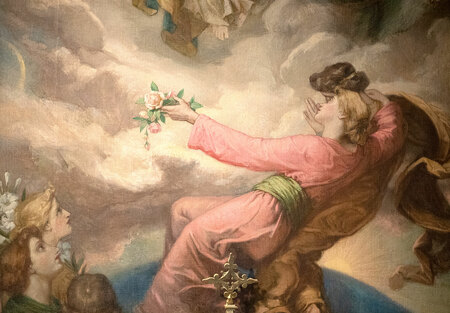
Correlieu retrouvé 2026 One of the religious frescoes painted in churches by Leduc

A Journey Toward the ‘Genius of the Mountain’
Having explored Québec art history in this way and translated it through the works shown at the museum, Mathieu Laca feels he has experienced it from within, through action rather than contemplation. He has absorbed its psychological forces and the inflections of its language. ‘My body retains the memory. The misunderstood symbolism of Ozias Leduc’s paintings now comes into new focus in light of the feelings he experienced for the poet Guy Delahaye. His painting appears as the sublimated expression of a forbidden love, something that resonates powerfully within me,’ he says. Paul-Émile Borduas, for his part, taught Laca the fierce desire to free oneself from everything that constrains creation. The underground stream whose gates he opened will not soon run dry. Jordi Bonet, that dazzling human poem, brought him into contact with the sacred. ‘Death has seemed less frightening to me since he tamed it,’ Laca concludes.
-------------

With this exhibition, Laca, a Laval native who still lives there, reaches another stage in his artistic vision. ‘I summarize my approach this way: portray people differently; write and paint simultaneously; paint portraits of writers and write about visual artists. This creative interweaving interests me profoundly because it carries new resonances. For me, the two arts operate as communicating vessels, allowing me to cross their respective boundaries freely by moving endlessly from one to the other.’

Curiously, the house Laca shares with his husband, Jean Comeau, faces a cemetery where a stone angel watches over the grave of Marc-Aurèle Fortin, another major Québec painter. ‘On misty days, I like to imagine the landscape artist on his bicycle, a canvas under his arm, searching for the ideal view of the great elms that have since disappeared.’
Correlieu retrouvé 2026

Correlieu retrouvé
Musée des beaux-arts de Mont-Saint-Hilaire
150, rue du Centre-Civique
Mont-Saint-Hilaire (Québec)
from June 20 to September 27, 2026

Artist-guided tours available:
Sunday, July 19, 2 p.m.;
Saturday, August 1, 1 p.m.;
Sunday, August 16, 2 p.m.;
Saturday, August 29, 1 p.m.;
Sunday, September 13, 2 p.m.; and
Sunday, September 27, 2 p.m.

Information: https://mbamsh.com/exposition/correlieu-retrouve/

A holiday in Charlevoix? Wild nature, fresh air and a stunning diversity of landscapes, three national parks, one of the world's best spots for watching marine mammals, and the astonishing variety of its natural sites: the Charlevoix region has plenty to appeal to even the most demanding.

Hébergement Charlevoix
This is what prompted Daniel Guay, 20 years ago, to create a centralized platform for chalet and condo rentals in the region, Hébergement Charlevoix. "Whether with friends, as a couple or with family, in a cozy retreat just for you. Rustic, luxurious, at the foot of the ski slopes or on the shores of a lake surrounded by wilderness, there are many options for finding a chalet to rent," explains its director.
The organization offers a selection of over 300 comfortable and affordable chalets, houses and condos in the Charlevoix region. "We offer the comfort and tranquillity of a house or chalet for a hassle-free stay, just like being at home," says Daniel Guay. Winter or summer, all year round, you can find the perfect getaway, bringing only your clothes and personal belongings. This has its advantages, especially when travelling with family.
Ski enthusiasts know how popular and highly regarded the ski resorts of Charlevoix are. Many of the chalets and condos available are conveniently located near the slopes, sometimes even right at their base. Those who prefer the river, the sea air, and the region's sandy beaches will also find plenty to enjoy. In short, there are chalets and houses for rent to suit every taste and occasion.
In addition to offering accommodation options, the company's website features a range of activities and tourist attractions to visit in Charlevoix year-round. There's plenty to choose from. It also highlights regional festivals and the best places to eat. A team of seven staff members continuously updates these sections.
Vacationers looking for the rare gem can easily find it by using the website's search tool, or by visiting the Baie Saint-Paul offices to meet the team in person.
Hébergement Charlevoix
In short, 20 years of experience in rental accommodations is certainly a guarantee of professionalism and quality. Furthermore, Daniel Guay is a director of the Corporation de l'industrie touristique du Québec (CITQ), which is responsible, among other things, for registering tourist accommodations in Québec. All listings on the Hébergement Charlevoix website are registered there.
Hébergement Charlevoix
hebergement-charlevoix.com
43, rue Racine
Baie-Saint-Paul, Qc G3Z 2P9
418 435.5107

Sacre-Coeur

Tadoussac: Dunes and Whales

Escoumins Essipit

Archeo Topo

Sandbank

Nature Park

Manic 5

Sainte-Amelie

Pointe des Monts

Pointe aux Anglais

Nord-Cotier

Gallix

Trading Post

Purmer

Surfshack Beaches

Innu Nikamu

Chute Manitou

Rivière au tonnerre

Longur-Pointe île aux Perroquets

Havre Stpierre

Archipel de Mingan

Baie Johan Beetz

Natashquan

Anticosti

Basse-Côte-Nord 

300 km of beaches

Monts Groulx

The Kamouraska region is known for its community initiatives and the originality of its entrepreneurship in many respects. The population of Saint-Denis-de-la-Bouteillerie is no exception. When Father Jean-Baptiste Ouellet, the last priest to live in the rectory next to the parish church, left in 2014 after 36 years, the decision was made to revitalize this gem of a building, built in 1895.


In 2017, the Corporation pour le maintien des lieux historiques de St-Denis was created to structure the project to revitalize the rectory. A social economy enterprise made up of community administrators proposed turning the building into an inn with a café. A fundraising campaign raised funds from several local and regional partners to acquire the building in 2018. A team of volunteers then completed the renovations, so the inn could welcome guests to its five rooms and offer breakfast and snacks at the adjacent café.

Maison Jean-Baptiste
Each room has retained its authentic charm and has its own private bathroom. Common areas are also available: a living room with a piano, a beautiful dining room, and a common room with a microwave and refrigerator. The room the bishop occupied during his annual visit is also available to visitors, explains Sylvie Gendron, one of the administrators.


The non-profit corporation, operating as a social economy enterprise, employs seven people for the café kitchen and the inn's housekeeping. The inn welcomes guests year-round, but the café is open from Friday to Sunday. It serves a healthy menu featuring local products, available for dining in or takeout.


Working with history, heritage, landscapes, and regional traditions, and making them the foundation of their actions. Ensuring community ownership of the development of the services it needs. Placing local and regional attractions, as well as the expertise of the people of Kamouraska, in the foreground. This is what motivates and inspires the Maison Jean-Baptiste team.


A warm and friendly stop awaits visitors passing through Kamouraska.

La Maison de Jean-Baptiste
lamaisondejeanbaptiste.com
5, route de l’Église
Saint-Denis-De-La-Bouteillerie (Québec) G0L 2R0
418.894.2213

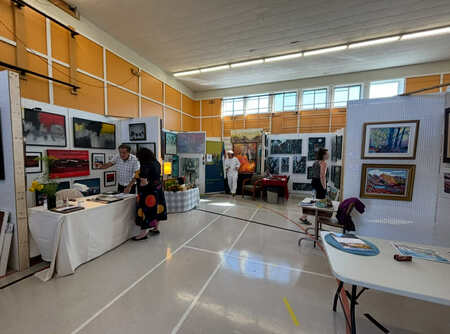
The team behind Clorid’Art just announced the symposium’s fifth edition will happen in Cloridorme, right in the l’Estran part of Gaspésie, on July 31, August 1, and 2, 2026. Everything takes place in the village school gym, a spot where the landscape, the people, and the art all seem to click. This year, the honorary president is Philippe Roy, an artist who grew up in Cloridorme.

Clorid'art 2025

It’s the first time they’ve picked someone who’s already taken part in three earlier editions. “We wanted to thank Philippe for everything he’s brought to the event,” says Marc-Alain Marticotte, one of the founders, “and also celebrate his 80th birthday in 2026.”

Artists from any discipline and any region had until June 14 to send in their applications. They were asked to talk about their own way of working and to let the place, its rhythm, its people, guide them.
The committee will reveal the chosen artists in early July. Last year, about twenty creators showed their work at Clorid’Art, and more than 125 visitors stopped by.

Clorid'art 2025

Want more details or the list of 2026 participants? Check the Clorid’Art Facebook page in the next few weeks. 

Since 2019, Val d’Or has hosted the Festival Fierté Val d’Or, a celebration of sexual and gender diversity in Abitibi. It’s the only LGBTQ+ festival in the Abitibi-Témiscamingue region.

The 7th edition runs from June 5 to 7, 2026. Expect comedy, live music, glitter, and three days of parties to honor sexual and gender diversity.


Fierté Val d’Or 2026

On Saturday, June 6, Fierté Montréal presents Community Day starting at 1 p.m. at Place Agnico-Eagle. It’s a chance to spend an afternoon together, festive, inclusive, and full of good vibes. Meet local organizations, learn about different experiences, and celebrate diversity in a relaxed, family-friendly setting.

Fierté Val d’Or 2026

For the eighth year running, the festival wraps up with the Diversity March, hosted by The KaraoKings. On Sunday at 11 a.m., LGBTQ+ folks and allies are invited to gather at Place Agnico-Eagle in their brightest rainbow gear. Together, they’ll march through Val d’Or’s streets to stand against homophobia, biphobia, and transphobia.

Fierté Val d’Or 2026 Fierté Val d’Or 2026

After the march, the Aqua-lition Family Picnic starts at 1 p.m. at Plage Lemoine. The event is put on by the Coalition des familles LGBT+. Plage Lemoine is a small, sandy, free beach on Lac Lemoine, just a few minutes from downtown Val d’Or. 

Fierté Val d’Or 2026

For the full schedule, check out the website of Fierté Val d’Or 
or their Facebook page .

In Cap-aux-Meules, in the Îles de la Madeleine, for the International Day Against Homophobia, Biphobia and Transphobia, the committee Vent de fierté, in collaboration with the Municipalité des Îles, will hold the LGBTQ+ flag-raising ceremony on Friday, May 15, at the Municipalité des Îles town hall, from 11:45 am to 1:30 pm. 

This activity is designed as a moment of gathering, visibility and solidarity with LGBTQ+ communities, as well as an opportunity to collectively reaffirm the importance of respect, inclusion and the fight against all forms of discrimination. 

Full details about the event: https://www.facebook.com/events/2910079679384222/

May 17, 2026

Also in the Îles, on May 17, the committee Vent de Fierté sets up at L'Abri de la Tempête, the Étang-du-Nord microbrewery, for a memorable evening marking the International Day Against Homophobia and Transphobia. 

On the agenda: A totally queer vibe, great beer and lots of pride. The motto: BE FABULOUS. We want to see your best looks! You're all invited to celebrate the diversity of the archipelago. Free event. 

More info: https://www.facebook.com/events/1527876618835049

In Bonaventure, Gaspésie, the Bonaventure City Council adopted a resolution supporting the International Day Against Homophobia and Transphobia, held each year on May 17. 

To mark the occasion, the public and media are invited to a rainbow flag-raising on Thursday, May 14, starting at 9 a.m. in front of Bonaventure City Hall. The flag will be raised on the City Hall flagpole for a few days as a sign of solidarity, inclusion, and respect for people of diverse sexual orientations and gender identities. 

The organization LGBT+ Baie-des-Chaleurs will be there to present its services and its commitment to the community.

May 17, 2026 

In Rivière-du-Loup, in the Bas-Saint-Laurent, May 17th was chosen to host the 2nd edition of the Pride Fair & BBQ at RDL, held at the Parc urbain de la Cité et du Campus, starting at 3 p.m. 

It's the Uniphare organization and the Comité Fierté de Rivière-du-Loup et du Kamouraska who invite the LGBTQ+ community and their allies to a festive gathering to celebrate diversity! The organizers expect a large turnout to make pride visible and fight together against homophobia and transphobia! 

Plenty of activities for the whole family, including a free BBQ at the end of the day. Tables, kiosks, a small craft market, face painting for everyone, a Set Queeré dance with music, skill games, etc. 

Moved to Collège Notre-Dame in case of rain.


More details at https://www.facebook.com/events/1138316358428784

RSS Feed

Subscribe

Categories

Tags

Latest Posts

Archives