

Since 2008, Île d’Orléans has been home to a business founded by a couple who have never stopped pouring their heart and passion into it, making it what it has become today. Originally known as "Aux petites douceurs", it offered terroir products, Québécois creations and, as its name so aptly puts it, "little sweet treats".
Both European but well travelled, they chose to make the move from Martinique to Québec in 2006, after visiting a few times and falling in love with the place. Steeped in confectionery culture, they have been in the culinary and pastry business for more than 45 years.
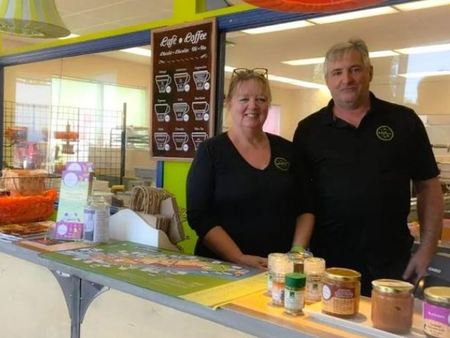
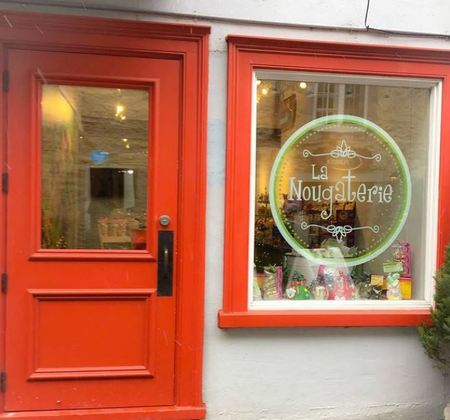
A few years later, Caroline Marelli and Patrick Augier had the idea of making all these little treats themselves, which they offered at their shop, now called La Nougaterie. They chose to work with nougat, combining it with honey and maple, two natural sugars.
Nougat is made from egg whites. "No colouring, no additives, no chemicals," Caroline assures. Almonds, pistachios and orange blossom are added to these confections, which come in various shapes. It is made following an artisanal, old-fashioned recipe.
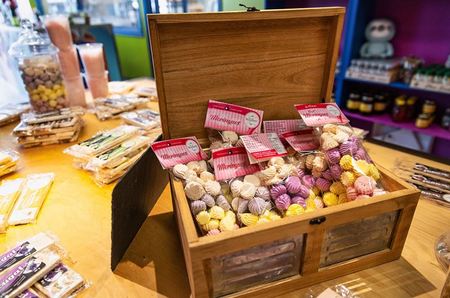
La Nougaterie also offers its sweets and other treats, with recipes worthy of the finest, especially meringues, marshmallows, lunes de miel, spreads and jams, bouchons de l’île, fruit butters (apple, blueberry, etc.) and nougats in all their forms and in a good number of fruity flavours. Caroline is quick to add that nougat is a very energizing product, low in calories.
On Île d’Orléans, they make 14 flavours of nougat candy, and the caramel ones are the most popular. Lunes de miel are also popular. The full range is worth a look at the shop in Saint-Pierre, not far from where the great Félix Leclerc spent much of his life.
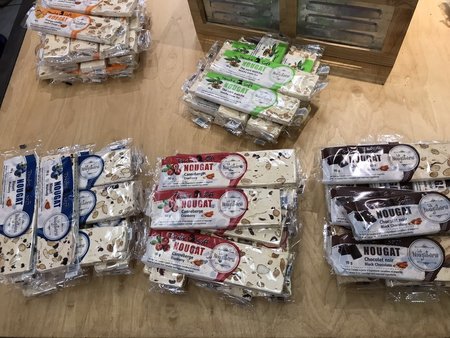
You can also visit the online shop and order your favourite products.
La Nougaterie also has a shop in Québec's tourist district, at 51 rue du Petit Champlain.
Nougat known in Antiquity
Nougat, a soft and smooth confection dating back to Antiquity, was made in the Orient with almonds, honey and spices. The Greeks also knew how to make it, using walnuts. In the 14th century, confectioners in Damas, Syrie, decided to make a softer nougat and incorporate pistachios from Alep, which gave it a pleasant aroma.
Various soft and hard varieties emerged over the centuries. The true nougat, as we know it today, appeared in the mid-18th century. Egg whites, blended with honey and sugar, were added, which helps to aerate the paste well.
La Nougaterie de Québec
nougateriequebec.com
1367, Chemin Royal
Saint-Pierre-de-l’Île-d’Orléans
(QC) G0A 4E0
418.991.0889