
Eat and Drink

coucher du soleil

The Acadian Coast has more to offer than just beaches and cultural attractions. Its culinary pleasures are quite appealing too. The region of La Sagouine and that of Shédiac, the lobster capital of the world, are examples.

In Bouctouche, the land of La Sagouine, you can expect to find distinctive spots. The Restaurant la Sagouine, next door to the gîte of the same name, right in the heart of the city, is a perfect example. For those looking for a novel gastronomic experience, you can enjoy Acadian dishes or famed seafood here. Tour buses regularly drop off passengers for an afternoon meal. The breakfasts are especially renowned.
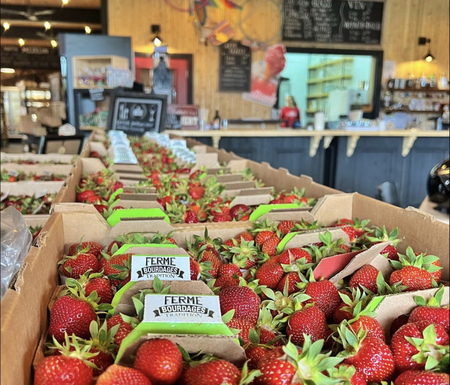
The famous Marché des fermiers of Bouctouche welcomes local food lovers every Saturday from May to December.

Bouctouche Shediac

In the heart of the city centre, on rue Main, the restaurant La Coast was founded in 2012. Its new owner since 2024 continues the tradition of this family restaurant, which quickly became a favourite with both locals and tourists. Seafood in various forms is king here, but they also serve a variety of dishes such as steaks, burgers, chicken, pasta and salads. Up to 16 beers and other beverages are on tap, plus a bottle selection, one of the largest in the region. Breakfasts are renowned and popular.

Inspired by characters from Alice in Wonderland, the playful bistro le Moque-Tortue, in a large house on rue Main, lets you play, escape, and eat, all in one place. With the largest board game collection in the Atlantic region as well as well-designed escape games, it offers a varied menu of good, well-prepared dishes. Seafood takes centre stage. The Sunday brunch alone is worth the trip. There’s music on the terrace every day throughout the summer.

Not far from Moque-Tortue, owners Sébastien and Heater offer Adorable Chocolat. The place offers a range of chocolates made on the premises from simple, natural ingredients, and is also a café serving soups, sandwiches, and desserts. In the mornings, you’ll find fresh brioches and viennoiseries. They now also serve alcoholic cocktails alongside a wide selection of coffees, daily until 6 p.m.

As if that weren’t enough, these same entrepreneurs have acquired the ciné-parc Neptune, back in operation since May 2024, where they will also run the canteen under the name Morse et Marteaux, to continue the "Pays des Merveilles" concept. They also secured the operating contract for the Plage Parlee canteen in Pointe-du-Chêne. Sébastien Després dreamed of a Texan-style meat smoker. He built one and installed it at the drive-in’s canteen. It will be used to smoke chicken and beef over a wood fire, to be served at both canteens and his two restaurants in Shediac.

Bouctouche Shediac

Note: every July since 1949, Shédiac has welcomed its renowned Festival du homard celebrated across the city with a host of culinary activities. Don't miss the Grande Table on the main street right in the heart of downtown.

Believe it or not, 2024 marked 10 years since the arrival of Microbrasserie Le Malbord in the Gaspésie landscape. Housed in a completely renovated former grocery store by the sea in the heart of Sainte-Anne-des-Monts’ historic district, Le Malbord has become a welcoming gathering spot, bringing this heritage building back to life with a chic, rustic decor featuring creations made from recycled objects.

For language lovers, "malbord" is a folk expression for Haute-Gaspésie, the other Gaspésie that refuses to be forgotten. The Gaspésie is often associated with Baie-des-Chaleurs. Malbord refers to the other side of the Gaspésie. "For us, it's a way of saying it's worth stopping in Sainte-Anne-des-Monts. There are fine products and a fine community of all ages, super involved," says co-owner Félix Labrecque.

Le Malbord 

Sainte-Anne-des-Monts is the largest municipality in Haute-Gaspésie, yet it is also the Québec town that has seen the steepest population decline in recent years. It therefore deserved a little entrepreneurial energy.

In 2012, three people from very different backgrounds, yet all concerned about their future and aware of the buzz then surrounding microbreweries, decided to take the plunge and seize the opportunity before them. After two years of small-scale brewing experiments in the basement of one of their homes, they moved forward with their project by acquiring and renovating the building on 1ére avenue.

Le Malbord

They even considered growing hops… but after careful thought and recognizing the lack of potential, the project never materialized.

In the meantime, they had their first self-designed beers brewed at Pit Caribou (Percé) and le Naufrageur (Carleton-sur-Mer), and finally welcomed their first customers in November 2014. A year after opening, Le Malbord celebrated the start of in-house brewing with modern equipment and recipes carefully crafted by the owners.

Le Malbord 

Le Malbord

From 2018, Thierry Lafargue, a forestry worker, and Félix Labrecque, an architecture enthusiast, carried on the Malbord adventure on their own.

Le Malbord now offers refined craft beers with recipes inspired by the richness of the terroir. The owners describe their products as "beers to share and discover, beers that assert themselves over time. Good sea or bad, they cling to your palate like crags of rock to the sea. They’ll take you on a journey, letting you discover their flavours as well as the beauties of our corner of the country, with its mountains and endless sky."

Le Malbord
The bistro bar serves 11 house-brewed draft beers at all times. Several products, including the white, blonde, red and black beers in 473 ml cans, are sold in grocery stores and shops across Québec. For hearty appetites, the pub-style snack menu offers tasty dishes. There’s also a dedicated shop selling Malbord clothing and accessories, plus beer to go.

Le Malbord 

Le Malbord

Once a venue for cultural events and discovery, the emphasis is first and foremost on fun! As a small team, they occasionally host a comedian, a fun quiz or karaoke nights.

Le Malbord

Le Malbord is open year-round from Thursday to Sunday. In summer, you can enjoy the front terrace and watch the beautiful sunsets over the Saint-Laurent.

Microbrasserie Le Malbord
lemalbord.com
178, 1ère avenue Ouest
Ste-Anne-des-Monts, Qc G4V 1C9
418 764.0022

Autumn morning light bathes the place. The old building sits proudly under the trees of rue de l’Évêché, just steps from the lively rue Saint-Germain with its many shops.

The restaurant, popular for 30 years, can accommodate up to 120 people across two floors and on the terrace in fine weather. Beyond the splendid ancestral staircase crowned by an impressive chandelier that’s visible right from the entrance, more than a thousand birdhouses, including some of the most original, adorn the building’s various corners, the work of the restaurant’s founder, Alain Bellavance. The new owners have taken over and continue to grow the imposing collection.

Central Café  Central Café

In fine weather, an outdoor terrace in front of the elegant Victorian house is a genuine, sunlit haven of peace in the heart of downtown Rimouski. It lets guests enjoy the gentle sun while beautiful mature trees provide shade.

Central Café

Built in 1920 by retired priest Georges Gagnon, the building is distinguished by a distinctive Gothic-inspired front portal that dominates the facade, and by splendid galleries that wrap around three sides of this ancestral home. Its turned-wood posts, supported by volute consoles at the top of the balustrade, are original. As a result, past and present owners have ensured this treasure, now over a century old, is preserved.

Central Café Central Café

It was Julie Lacroix and Alain Bellavance who created this brand-new restaurant concept in June 1995. A few years later, another business group took over, and the great adventure continues, much to the joy of a growing clientele.
Finally, in June 1995, Central Café underwent a major management transformation: the previous owner wanted to retire with no successor in place, so a group of employees and a few other individuals interested in keeping the business going decided to move forward and turn it into a solidarity cooperative. The group received help and advice from an expert to work on this worker cooperative project.

There are 16 people, several of them long-time employees, who have been members of the cooperative for nearly 10 years. general manager Nancy Dubé, one of the project's initiators, explains that the model's success lies in the strong sense of belonging created by this management and operating structure: rather than working for a boss, members work for their own organization and take part in decisions. There is also talk of significant tax benefits.

Central Café Nancy Dubé, general manager


Central Café is a member of the Association des restaurateurs du Québec and Saveurs du Bas-Saint-Laurent, an organization tasked with promoting Bas-Saint-Laurent products. The restaurant prominently features the region's agri-food products in its dishes and prides itself on supporting local artisans, who are a source of pride for the region.

Today, over 27 people run Central Café, which is open year-round, 7 days a week.
Guests particularly appreciate the quality of the menu, which offers a good variety of burgers, pasta, pizzas, smoked meat and cutlets. For sides, you can choose from a bowl of house fries, French onions, Atlantic smoked salmon or house parmesan fondue, some of the kitchen's delights.

Central Café Central Café

The kitchen strives to create unique recipes, concocted by the cooks and prepared on site from local ingredients and products. They're also proud of the delicious original desserts made here.
Central Café is well worth a visit for those who appreciate delicious food, a pleasant and relaxed atmosphere, and a stay in a setting rich in history and quality cuisine. Home delivery is available at all times.

Central Café

Central Café
centralcaferimouski.com
31, rue de l’Évêché Ouest
Rimouski (Qc) G5L 4H4
418 722-4011


By Gaëtan Vaudry

Since 2017, Microbrewery La Mouche has been turning heads with its beers, almost exclusively crafted from Quebecois ingredients, without any additives.

Right off the bat, Kelly Mansbridge, the head of sales and marketing at the young Natashquan microbrewery, shared her insights on a slight slump the Quebec microbrewing industry had been experiencing for several months, as reported by some media in November: "It's certainly not easy," she candidly noted. "With many microbreweries in Quebec and a vast range of products available to enthusiasts, the market is becoming increasingly competitive."

La Mouche4

Natashquan's Own Wild Yeast

Gabriel Turner, the artist and craftsman behind the success of La Mouche's beers, originally from Montreal and adopted by Natashquan, founded the microbrewery in 2017. He brewed his very first beer at the Microbrewery St-Pancrace in Baie-Comeau, before moving to Natashquan three years later. "Gabriel loves Natashquan for its wild nature, its unfenced lands, and the social life of a welcoming community," Kelly proudly mentioned. "Passionate about this beautiful region of the North Shore, Gabriel aimed to create jobs in the area. He wanted to produce a beer for the local people." After extensive research and development, Gabriel achieved his goal, brewing beers with Quebec hops and grains, and even cultivating his own wild yeast in Natashquan!

I had the opportunity to taste only one product from Microbrewery La Mouche: Mlle Manon, a gently wheat beer with little bitterness, inspired by German hefeweizens. This beer's effervescence is lively, almost sharp. In its large bottle, one finds a hazy, foamy, and sparkling beer with a fresh and pleasant grainy flavor. Mlle Manon is remarkably refreshing, which is exactly what I look for in a beer!

Mikushkuau: The Microbrewery's New Beer

Microbrewery La Mouche offers more than 16 varieties of beer, from Bomber Jaune to Mickey Finn, including Cosse Boom, Pelletier, Pirate, Muddler, Pompier, Green Butt, and Colibri, to name just a few. Did you know that each beer name refers to a fly used in fly fishing? For instance, the microbrewery recently announced its new beer, Mikushkuau ("The sky is red" in Innu language), inspired by a fishing fly specially created for the company by Audrey Ringuette, founder of the North Shore enterprise Shakutaimu. Ms. Ringuette offers introductory fly fishing courses for everyone.

La Mouche's beers are available at over 150 locations in Quebec, especially in establishments specializing in microbrewery beers (see the list here).

Microbrewery La Mouche
33, Chemin de l'Aéroport
Natashquan (Québec)
418 962-6003
microbrasserielamouche.com

Aficionados are well-aware that Cantharellus cibarius, known in French as girolle or Chanterelle commune, is a species of basidiomycete fungi belonging to the Cantharellaceae family. This mushroom, widespread across the Northern Hemisphere, is esteemed for its culinary excellence, ranking among the most renowned and sought-after in its category.

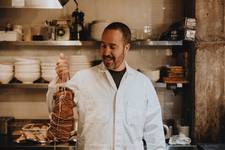
By analogy, the same can be said for the French "bring your own wine" restaurant La Girolle, nestled in Quebec's Saint-Sacrement neighborhood, which has been a well-known and sought-after destination for 23 years. Owned by Chef David Grenier (photo) since 2018, the establishment has preserved the spirit and values of its founders while naturally evolving its menu over the years and seasons.

La Girolle

Let's highlight some of the famous dishes available. Starters include: Deluxe Charcuterie Plate, Escargot Pastry in Cheese Sauce, Flavors of L'ile d'Orléans, Bison Carpaccio with Truffle Emulsion. Main courses particularly appreciated are: Scallop and Shrimp Risotto, Grilled Lamb Loin with Spanish Sauce, Duck Breast with Port and Serviceberry, Braised Sweetbreads à la Forestière, Land and Sea / Black Pudding with Spices, Deer in Mushroom Crust with Périgord Sauce, Salmon Pavé with Mango Salsa, Chef's Style Beef Fillet Mignon, Pork Tenderloin with Cheddar Fondue and Balsamic.

La Girolle La Girolle

Grenier, before acquiring the restaurant, had been actively involved in various kitchen roles, from dishwasher to cook, starting at the age of 18. Despite not attending prestigious culinary schools or holding renowned degrees in hospitality, his merit includes stints at famed establishments during travels in Australia and around the world, where he honed and developed his culinary skills.

Alongside the previous owners of La Girolle, he has cultivated the art of dining based on dishes that continue to contribute to the place's fame and draw a loyal clientele, in addition to developing an entirely new menu. Since Grenier took over, there have been no major changes to the venue: the carpet was removed, and some minor renovations were made. His motivation lies in maintaining consistent quality in the cuisine, always in line with market availability and seasonally affordable products.

La Girolle 

In addition to the regular menu displayed on large wheeled blackboards, which changes with the seasons, one can always order frozen dishes for takeout, offering meals distinct from the regular menu and complementing the dining room offerings. This product, even post the 2000-2001 pandemic, continues to enjoy success. They also offer various takeout and reheat dishes (soups, salads, charcuteries, sweetbreads, black pudding, pork tenderloin, for example).

La Girolle

Indeed, La Girolle remains one of the rare "bring your own wine" (or beer) restaurants in Quebec City, a concept David Grenier assures will not change. This format is highly appreciated six evenings and three afternoons each week, from August to June. Its location outside tourist districts allows a month-long July vacation for the team of approximately 25 employees.

La Girolle

La Girolle can accommodate up to 140 guests in the evening, from Tuesday to Sunday, with 106 seats spread across two distinct sections. Reservations are recommended, especially from Friday to Sunday. Workers and residents of the neighborhood frequent it for lunch from Wednesday to Friday.

For history enthusiasts, the establishment Les Prés had been located here since 1990. La Girolle has been operating at this address since 2000.

La Girolle

Restaurant La Girolle
lagirolle.ca
1384, Chemin Sainte-Foy
Québec, QC, G1S 2N6
(418) 527-4141

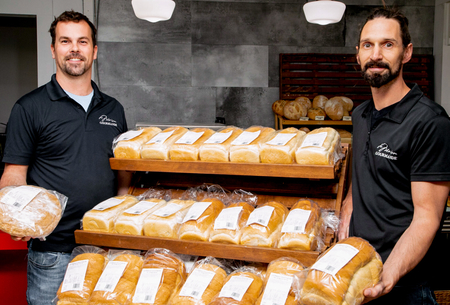
Patrick Nisot moved to Québec with his parents from Belgium in 1986. He started out studying agronomy at Université Laval, thinking it covered everything about food, what people grow, how they grow it, and what ends up on their plates. But baking was always on his mind.

Twenty-five years later, his four La Boîte à Pain bakeries in Québec employ 150 people.

La Boîte à pain 2026 La Boîte à pain 2026

The idea really took shape when he was 26, working on a grain farm in Saskatchewan. That’s when he decided he wanted to run his own business. Back in Québec, he spent the summer figuring out his next move. Baking had always been his dream, ever since he was a kid visiting his grandparents’ bakery in a small French village, where they made an incredible baguette. He could still picture himself sliding loaves into the oven.

With help from employment insurance, he took a bakery course in Montréal-Nord to get the skills he needed. After that, he worked at a bakery on rue Cartier in Québec, soaking up everything he could about the trade.

When Patrick tried to open his own bakery in 1999, banks turned him down. He’d spent six months putting together a solid business plan and even got it approved by the CLD de Québec. But it was the Fonds d’emprunt Québec that finally gave him a chance, lending him $15,000 to get started. The organization helps local entrepreneurs who can’t get traditional financing.

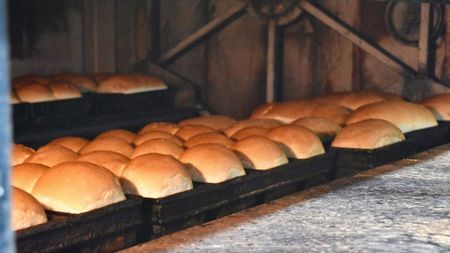
Then, on October 19, 1999, at 3:30 a.m., after two years of planning, training, renovations, and test runs, Patrick turned on the mixer at La Boîte à Pain. The space was on rue Saint-Joseph in Saint-Roch. He started with a white dough made with poolish , 25 kilograms of it, shaped into 20 baguettes, 10 Belgian loaves, 10 white squares, 10 round loaves, and a few ficelles.

The mixer had been running for three days straight, and the oven was already hot. The first test loaves went to curious neighbors who’d gathered outside. The bakery door was still covered in brown paper, waiting for the official opening, but Patrick had to let people in, the place was sweltering without any ventilation. They handed out bread fresh from the oven. It was the best way to see if customers would like it. They did.

When they finally opened for business, they sold 15 baguettes a day in the first week. After that, sales doubled every year. By 2002, they had about 20 employees at just one location.

In the spring of 2007, Patrick came back from Naples, Italy, with a new idea: Neapolitan pizza. At the time, no one in Québec was making it. The problem? You need an oven that gets much hotter than a bread oven. He found one in Lévis, tucked away in a storage building. A year later, on April 1, 2008, La Boîte à Pain/Café Napoli opened in Limoilou, built around that oven.

La Boîte à pain 2026 La Boîte à pain 2026

The same setup opened in Sainte-Foy in 2015 and at the Grand Marché de Québec in 2019. The Grand Marché location only sells products, while the other two are both bakeries and pizzerias. Meanwhile, the original La Boîte à Pain moved to rue du Parvis in Saint-Roch, just a short walk from where it all started.

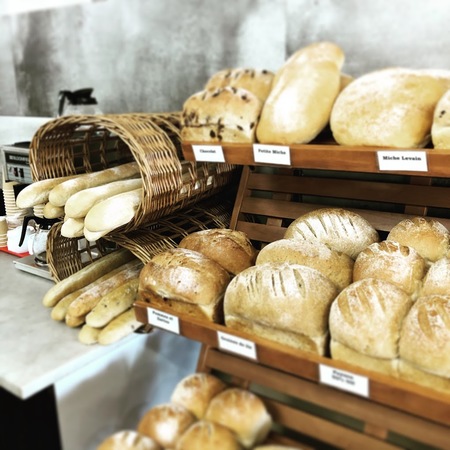
Since 2014, they’ve also had a production center where they make about 40 kinds of artisanal bread. Back in 1999, they mostly sold white, wheat, and rye bread, baguettes, croissants, chocolatines, and brioches. Now, they distribute around 3,000 croissants and 10,000 viennoiseries to their four locations every week. Over 25 years, Patrick has seen the world of bread and pastries change alongside his team of bakers and artisans.

La Boîte à pain 2026 Patrick Nisot with employees from the production centre

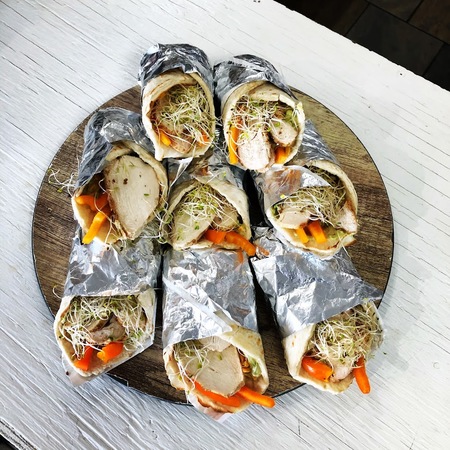
Today, La Boîte à Pain offers 40 types of bread, about 20 Neapolitan-style pizzas, gourmet sandwiches made fresh daily, a dozen kinds of viennoiseries, pastries in all sizes, and market products tailored to what customers want. Everything is made with top-quality flour and fresh ingredients from trusted local suppliers. For Patrick, there’s no room for compromise when it comes to quality.

He’s still the one calling the shots, but in 2024, he brought in a general manager, Jean-François Gagné, to handle day-to-day operations and production. Jean-François is set to become a shareholder, and Patrick hints that new projects are in the works, maybe even with partners. But in the spring of 2026, he’s keeping the details under wraps.

La Boîte à pain 2026

La Boîte à pain
boiteapain.com
Saint-Roch
432 rue du Parvis, Québec
418 647-3666

Sainte-Foy
2836, chemin Sainte-Foy, Québec
418 914-1133

Café Napoli (Limoilou)
396, 3e Avenue, Québec
418 977-7571

Grand Marché de Québec
250, boulevard Wilfrid-Hamel, Québec
418 692-2517 ext. 105

Entrepreneurs and businesspeople are often the ones behind great stories, the kind we want to tell and share. While we often hear unhappy tales when businesses go wrong, other people's successes are worth taking the trouble to bring into the open.
Carl Bourget and his family's story is just such a tale. For years, he owned a vineyard, a cidery, and a distillery in Lévis's Pintendre sector, in the Chaudière-Appalaches region. He wanted to expand his operations, but space was limited at his existing location. Today, after more than three years of effort and approximately $3 million in investment, Distillerie Cap-Chat holds a prominent place in Gaspésie.
A Fruitful Venture

After more than 25 years in business and solid results, Carl Bourget began looking for a new site in the greater Québec area and on the South Shore. After several unsuccessful attempts, his son's suggestion steered his search in a new direction: why not relocate to a tourist destination? Having grown up on the Îles de la Madeleine and in Gaspé, Carl naturally looked first to Gaspésie.

In the spring of 2021, Carl and his son Pierre-Étienne set out to explore together. Their first stop was in Haute-Gaspésie, in Cap-Chat, where, as it turned out, they never needed to look any further for the ideal site. A visit to the municipal office to explore the potential of the location led them to a large warehouse, a former shrimp processing plant now used as an automobile storage site.

As soon as they stepped inside, they could see it was exactly what they had in mind: right on Route 132, facing the sea, just steps from a municipal rest stop, in a hub of the wind-power industry, at the gateway to a vast tourist region that is popular and sought-after in every season. The final advantage for their project, and not the least, was Cap-Chat's groundwater: fed by mountain springs in the nearby Chic-Chocs, it is of remarkable quality and nearly inexhaustible. The distillery's raw material was thus assured.

Distillerie Cap-chat

Negotiations with the owner moved quickly. And so, in May 2021, they took possession of the premises and began renovating and installing the distillation equipment. Meanwhile, Carl Bourget completed the sale of his Lévis facilities, to finally dedicate himself fully to his new baby. In a crowning stroke of good fortune, one day while he and his son were measuring the building, the owner of the neighbouring house mentioned that he was interested in selling, which did not fall on deaf ears.

Shortly afterwards, the Bourget family also became the owners of a sturdy, handsome residence right next door to their distillery. They say luck often attracts opportunity, and here was another eloquent demonstration of it.

The Wind in Its Sails
After more than a year of construction, installation, testing and planning, the first customers were able to purchase Distillerie Cap-Chat products in December 2022. The distillery produces a diverse range of spirits and liqueurs made from herbs and aromatic plants, several of them harvested in Gaspésie, such as flowering dune pepper, wild rose, thuja and balsam fir.

Distillerie Cap-chat

Since then, the company has kept growing and adding new products, all in 375 ml and 175 ml sizes. A fortunate marketing move, says Carl Bourget, that lets customers buy two or three different products instead of just one in the standard 750 ml or 1 L size. “It's also a product that fits well in the gift category,” he adds.

As it marks its second anniversary in December 2024, there are 13 products available, with a 14th, a strawberry liqueur, coming out for the holidays. Meanwhile, Distillerie Cap-Chat is awaiting a decision from the Société des alcools du Québec (SAQ) to market three of its products: Gin Pin Gris, Limoncello and Liqueur de framboise.

Distillerie Cap-Chat Distillerie Cap-chat

For the past year, Pierre-Étienne Bourget, vice-president of production, has been producing educational videos in English and French for the distillery's Facebook page, covering the distillery, its processes and other aspects of production and product development. He has also developed on-site cocktail-making workshops with a mixology expert, a format that will eventually be offered again.

Distillerie Cap-chat

Visitors can stop by Distillerie Cap-Chat for a product tasting or an interpretive tour. There's also a room available to host groups or local events such as cocktail parties, book launches, or other activities.

The company employs seven full-time staff, and production and sales run year-round, seven days a week, with varying hours.

Distillerie Cap-Chat

Distillerie Cap-Chat
distilleriecapchat.com
16, rue Notre-Dame Est
Cap-Chat (Qc) G0J 1G0
418 575-7899

By Gaëtan Vaudry

I knew that stopping in Baie-Comeau, an industrial-port city on the North Shore, would give me the chance to meet friendly people. This was indeed the case with Frédéric St-Laurent Garon, one of the three shareholders of the Boucherie les trois p'tits cochons. Getting to know Fred, as everyone calls him, is to meet a passionate craftsman. For him, meats hold no secrets, not to mention sushi, of which he became a master over a good decade. The most loyal customers praise the impeccable service of the butchery's team, as well as the great variety of numerous products, their quality, and the much-anticipated return of the sushi counter.

3 petits cochons2 3 petits cochons3 3 petits cochons4

Fred and his partner make it a duty to offer a good dozen products from local producers (including those from Les jardins de Carmanor farm), and several products from Boucherie les trois p'tits cochons also feature on the menus of Manicouagan restaurants: "It's important for us to promote the work of local artisans," the main interested party emphasizes. "We're even thinking of proposing to another butchery in the region to create a new sauce with us. Simply to demonstrate the beautiful fraternity that exists between the businesses of Baie-Comeau."

Well worth the detour!

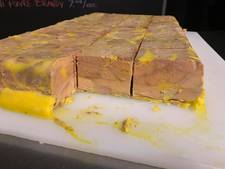
Among the top sellers at Boucherie les trois p'tits cochons are, of course, classic beef, but also marinated meats, a wide variety of sausages, charcuteries (including those from Charcuterie Le porc-épique), beef and salmon tartares, not to mention the veal and haskap berry tartare, a real lightly fruity delight, and the house's cheeseburger tartare. During my visit, Fred had just finished preparing stuffed jalapeno peppers with cheese and wrapped in bacon... who can top that?

Always in search of novelties, Fred is very happy about his new collaboration with Pinto's MC Wagyu, offering Wagyu beef of exceptional quality, originating from Japan. "The quality of this beef is incredible," the young businessman points out. "And its flavor, highly enhanced. It's not cheap, but it's worth the detour!"

Fred and his team have many projects. The return of the popular sushi counter shows just how much this product is in demand at the Baie-Comeau butchery: "The boxes disappear almost the moment we place them in the counter," explains the expert. "We are therefore in constant production, to meet the high demand." I personally had the chance to experience a dish of 10 sushis, specially prepared by dear Fred. And I can now understand the enthusiasm of aficionados for this excellent product of Boucherie les trois p'tits cochons!

Boucherie les trois p'tits cochons
873, rue Bossé, Baie-Comeau
418 294-0804
Visit the butchery's Facebook page

CARGO’s name is displayed proudly across the front of RIÔTEL-MATANE, making the restaurant impossible to miss. In 2025, it marked 10 years at the hotel, although long-time residents and regular visitors will remember that food service has occupied this same space for roughly 60 years, originally under the Hôtel des Gouverneurs banner.

Today, CARGO has shed its old skin and become a distinctive restaurant that offers a year-round nod to Matane’s industrial and maritime heritage. Its decor charms with its fixtures, simple raw materials and interior design, which create a particularly welcoming atmosphere in which to fully enjoy both the menu and the natural setting.

Riotel-Matane+Cargo

The feature that most surprises and delights on arrival is the broad wall of glass overlooking the Saint-Laurent and the vast expanse of its maritime estuary. The larger-than-life landscape is captivating in every season, as are the spectacular sunsets that unfold day after day. Boats entering and leaving the neighbouring marina add to the holiday atmosphere and sense of maritime life.

Before dinner, guests can enjoy an aperitif in the CARGO LOUNGE, which offers house cocktails, regional and imported beers, and wines from an extensive cellar. Mocktails and other non-alcoholic drinks are also available, and the lemonade deserves a mention. The lounge suits groups of friends, families or simply a relaxed 5 à 7. In season and weather permitting, the outdoor terrace extends the experience for meals and cocktails alike, always with a sweeping view unique to Matane.

Riotel-Matane+Cargo Riotel-Matane+Cargo

A private room built inside a shipping container can seat 10 for a birthday, business lunch or similar occasion.

CARGO serves breakfast and dinner to local patrons and guests of both Riôtel-Matane and Pavillon-sur-Mer. A team of seasoned chefs led by chef Jean-Alexandre Dubé creates what RIÔTEL describes as simple, high-quality and approachable food: urban bistro cuisine inspired by Gaspésie flavours, with vegetarian dishes and a children’s menu. Takeout is available, and several dishes can be prepared gluten-free.

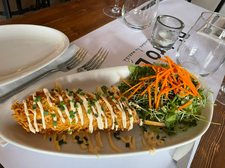
A number of menu items merit particular attention. Starters include duck drumsticks with crisp-pepper sour cream and foie gras au torchon with brioche, sea-buckthorn jelly and beet caramel. The flavours are undeniable. The beef and salmon tartares are also highlights. Main courses offer plenty of choice: fish and seafood, pasta, tartares, meats, burgers and vegan dishes. We enjoyed the house cod fish and chips, which evokes Gaspésie, and the AAA Angus flank steak and vegetables, worthy of a leading steakhouse.

Riotel-Matane+Cargo Riotel-Matane+Cargo

Desserts are limited in number but strong in quality, including a smooth cheesecake and banana tart filled with generous pieces of fruit.

At breakfast, CARGO offers a broad selection of plates, some incorporating seafood and even a breakfast poutine. Eggs and crêpes are served in several styles, accompanied by excellent coffee for those who need it to begin the day.

CARGO’s welcome and service are reputed to be of superior quality. Malela has worked there for 10 years, first as a server and more recently as maître d’hôtel, coordinating operations in the dining room and lounge.

Because Riôtel-Matane includes a convention centre, event participants also benefit from CARGO’s kitchen for catered meals. Following the acquisition of three other Gaspésie hotels, Groupe Riôtel Hospitalité extended the same broad menu concept to their restaurants, with variations showcasing local specialities in Percé, Bonaventure and, most recently, Carleton-sur-Mer.

Riotel-Matane+Cargo

Resto-bar-lounge CARGO
restocargo.com
250, avenue du Phare Est
Matane (Qc) G4W 3N4
418.566.2651

Over the last twenty years, Saint-Roch has earned the nickname “Nouvo Saint-Roch.” Right in its center, the Hôtel Royal William, now owned by Sept-Îles entrepreneur, hotelier, and developer Simon Dubé, has been reborn since 2018. Today, it brings a fresh dose of charm to Québec’s lower town, blending elegance, history, and great food.

Dubé’s journey wasn’t easy. Soon after buying the hotel, he faced a pandemic and a restaurant fire. A $6 million renovation followed, updating the 47 rooms and studios, refreshing the lobby, and giving the ground-floor restaurant a new Italian identity as Mila. Work has also been underway since 2026 to redesign the building’s façade on boulevard Charest.

Royal William 2026 Royal William 2026 Royal William 2026

The hotel has long been a favorite among Québec and Montréal’s artists and public figures. Its location is hard to beat, just steps from Saint-Roch’s cultural spots, restaurants, and the historic upper town. Parking is available nearby, under the Bibliothèque Gabrielle-Roy. The meeting rooms work for corporate events, training sessions, cocktails, birthdays, or product launches. Many rooms and suites even have kitchenettes, so guests can cook a meal or grab a quick bite without leaving. 

Royal William 2026 Royal William 2026

MILA Ristorante, the hotel’s completely reimagined restaurant, serves up refined Italian cuisine with carefully chosen ingredients. Co-owner Tchad Khalil, a passionate Italian food lover, brings years of restaurant experience to the table. He found a like-minded partner in Simon Dubé. “We wanted to create a place where every meal feels like a journey, something that comforts and inspires,” Khalil says. Mila also serves breakfast, with a hearty buffet open to hotel guests and anyone else craving a flavorful start to the day.

Saint-Roch wasn’t always this lively. Once a working-class neighborhood, it’s now a prime example of urban renewal in Québec. Development projects, creative businesses like video game studios and tech labs, a thriving arts scene, university outposts, and major organizations have all helped transform the area. The old energy is back, but with a modern twist, making Saint-Roch one of the city’s most dynamic districts.

The revitalization of Saint-Roch is part of a larger effort to expand public spaces, support local businesses, and preserve the area’s heritage. The building that’s housed the Royal William for over 25 years is one of those gems, its façade reminiscent of the long, retro-style hotels of 1920s Manhattan. “I wanted a boutique hotel that felt different from Québec’s bigger chains, a place without pretension, where you feel at home, with good service at fair prices,” says Simon Dubé.

Royal William 2026  Royal William 2026

For history lovers, the shift from sail to steam in the 19th century changed global trade forever. The first transatlantic crossing by a steamship was a major achievement. While other countries have claimed the honor, Canada holds it. The Royal William, a paddle steamer built at Québec’s Campbell and Black shipyard, made the journey from Pictou, Nova Scotia, to Portsmouth, England, in 1833, proving it was the first.

Royal William 2026 The Royal William, built in Québec in the early 1830s.

Québec recently announced a 2026–2029 plan to invest $80 million in Saint-Roch, with big ambitions for the district over the next 15 years.

Royal William 2026

Hôtel Royal William royalwilliam.com
360 boulevard Charest Est Québec, QC G1K 3H4
(418) 521-4488